
Antibiotic Resistant Infections Treatment Market
Antibiotic Resistant Infections Treatment Market: Approval Without Revenue, Subscription Payment Models, and the Burden Nobody Can Charge For
Several developers have won regulatory approval for novel antibiotics and entered insolvency within four years, because stewardship quite correctly restricts the very use that would generate the revenue repaying development.
2025 MARKET VALUE$6.4BMarket Size 2025
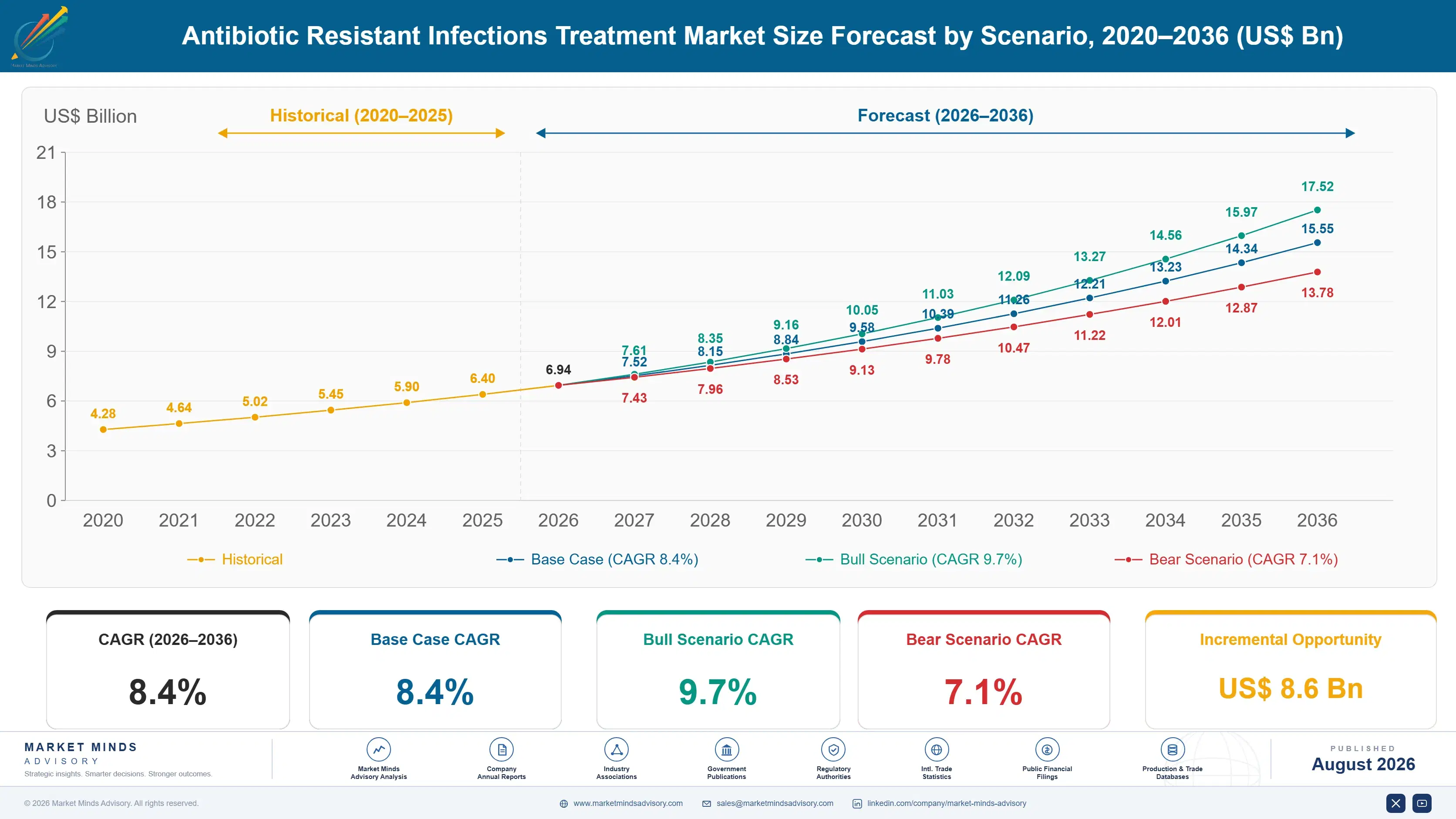
2036 FORECAST VALUE$15.5BBase Case , 2026 to 2036
CAGR 2026 TO 20368.4 %Bull 9.7% / Bear 7.1%
INCREMENTAL OPPORTUNITY$8.6BNet 10- year value creation
EXPANSION MULTIPLE2.24x2036 value over 2026 base
Strategic Levers
M&A Pipeline
Regional Outlook
Country Rankings
Competitive Intelligence
Segmental Deep-dive
Executive Snapshot and Market Trajectory
This market has a design fault that no amount of science fixes. A novel antibiotic that works against resistant organisms should be reserved rather than used widely, which is medically correct and commercially fatal. Several developers went from approval to insolvency inside four years. Science was never the problem.
Commercial power is shifting toward whoever can be paid without selling volume. Subscription arrangements that pay a fixed annual sum for availability rather than per course have moved from pilot to established practice in the United Kingdom, and comparable proposals sit before legislators elsewhere. Bacteriophage therapies grow fastest at 26.4%, roughly 3.14 times the market, from a negligible commercial base. North America holds 30% of value.
Concentration is moderate at roughly 47% for the top five, and it reflects survivorship as much as strategy, since the large companies remaining are those able to carry an antibacterial portfolio inside a much bigger business. Burden and value point in opposite directions: India and Sub-Saharan Africa carry the heaviest resistant infection loads and the least ability to pay, while revenue concentrates where reimbursement exists. Revenue and need sit in different places.
Market Definition
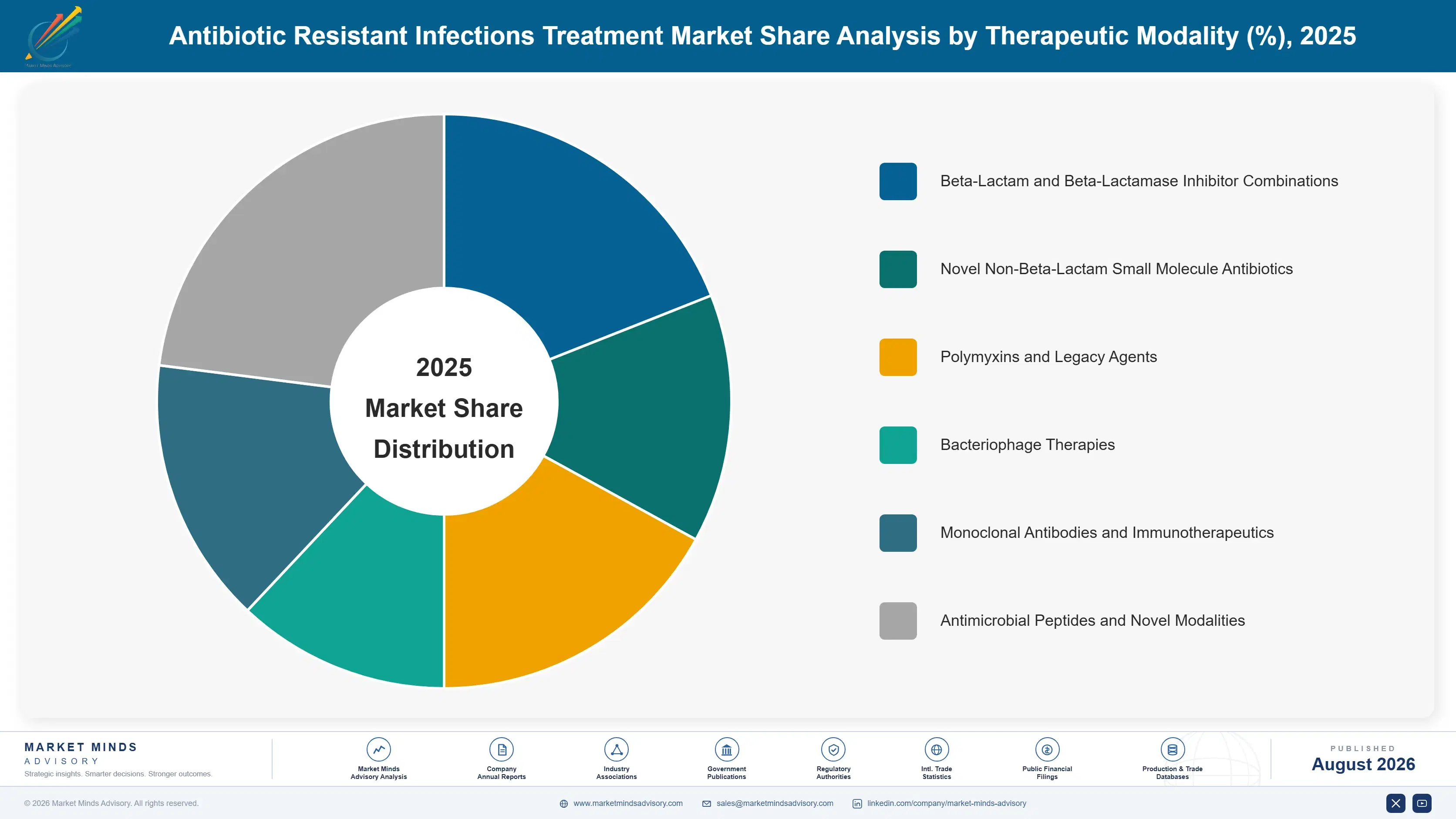
This report covers therapeutics used to treat infections caused by antibiotic-resistant bacteria, spanning beta-lactam and beta-lactamase inhibitor combinations, novel non-beta-lactam small molecule antibiotics, polymyxins and legacy agents, bacteriophage therapies, monoclonal antibodies and immunotherapeutics, and antimicrobial peptides and other novel modalities. Value is measured at manufacturer net revenue. Diagnostics, infection prevention products, vaccines, antifungals, antivirals, and antibacterials used exclusively against susceptible organisms fall outside scope.
Base Year Value
$6.4B in 2025 (MMA Primary Research Dataset, August 2026)
Forecast Period
2026 to 2036, eleven discrete annual values
CAGR
8.4% base case. Bull 9.7%. Bear 7.1%.
Fastest Growth Segment
Bacteriophage Therapies: 26.4% CAGR
Fastest Growth Country
India: 11.8% CAGR
Fastest Growth Region
South Asia and Pacific: 10.6% CAGR
Largest Region
North America: 30% of 2025 global value
Market Leaders
Pfizer, Merck and Co., Shionogi, GSK, AbbVie. Source: MMA Analysis based on company annual reports.
Primary Survey
n=3,800 procurement and R&D decision-makers, Q4 2025, six countries
Methodology
Demand-side build-up, cross-validated against public data, 47 expert interviews
Antibiotic Resistant Infections Treatment Market Forecast Scenarios

The 2020 to 2025 period demonstrated the problem rather than solving it. Several novel agents reached approval and several developers reached bankruptcy, teaching investors a lesson difficult to unlearn. The United Kingdom moved its subscription payment pilot into an expanded standing arrangement, the AMR Action Fund began deploying capital, and pull incentives elsewhere were introduced without passing. Historical growth of 7.2% came mostly from established combinations.
The 8.4% base case rests on three mechanisms. Resistant organism prevalence keeps rising, particularly among carbapenem-resistant Enterobacterales and Acinetobacter, which expands the clinical need whether or not the payment model works. Subscription and delinked payment arrangements keep spreading from the United Kingdom into other national systems, converting availability into revenue. And existing beta-lactamase inhibitor combinations keep taking share from polymyxins and legacy agents on tolerability and outcome grounds. None depends on a breakthrough.
The 9.7% bull case assumes major legislative pull incentives pass in the United States or European Union, restoring commercial viability to late-stage development broadly. The 7.1% bear case reflects continued legislative inaction, further developer failures, and pipeline attrition that leaves clinicians treating rising resistance with an agent set that stops expanding meaningfully. Legislation, not laboratories, decides between them.
The 8.4% base case rests on three mechanisms. Resistant organism prevalence keeps rising, particularly among carbapenem-resistant Enterobacterales and Acinetobacter, which expands the clinical need whether or not the payment model works. Subscription and delinked payment arrangements keep spreading from the United Kingdom into other national systems, converting availability into revenue. And existing beta-lactamase inhibitor combinations keep taking share from polymyxins and legacy agents on tolerability and outcome grounds. None depends on a breakthrough.
The 9.7% bull case assumes major legislative pull incentives pass in the United States or European Union, restoring commercial viability to late-stage development broadly. The 7.1% bear case reflects continued legislative inaction, further developer failures, and pipeline attrition that leaves clinicians treating rising resistance with an agent set that stops expanding meaningfully. Legislation, not laboratories, decides between them.
Why Approval Does Not Mean Revenue
Three forces govern this market and only one is biological. Resistance prevalence rises steadily and expands clinical need, which is the part everybody understands. Stewardship then restricts use of exactly the agents addressing it, correctly for public health and disastrously for revenue. And payment structure decides whether a developer survives, because per-course reimbursement cannot recover development cost from a product deliberately kept in reserve.
TOP-FIVE CONCENTRATION47%Share of resistant infection treatment revenue held collectively
AVERAGE COURSE PRICE$4,850Blended cost of therapy across novel and legacy agents
RESERVE USE SHARE23%Portion of novel agent volume released under stewardship restriction
POST-APPROVAL FAILURE RATE38%Developers entering insolvency within four years of approval
EMPIRIC PRESCRIBING SHARE71%Treatment initiated before susceptibility results become clinically available
PIPELINE CLINICAL STAGE COUNT97Antibacterial candidates currently in active clinical development worldwide
The commercial character is unlike anything else in pharmaceuticals. A successful launch in oncology means growing volume; a successful launch here means an agent sitting unused until a resistant isolate appears, which is a clinical triumph and a financial problem. Large companies can absorb that inside a broad portfolio. Small developers cannot, and the sector has lost several after approval, which makes late-stage investment harder to raise than clinical need suggests.
The next decade turns on payment reform rather than on chemistry. Subscription arrangements paying for availability rather than volume work where implemented, and the pipeline holds around 97 clinical stage candidates that could reach patients if development were financeable. Whether legislators in the largest markets act determines whether that pipeline advances or attrits. Nothing in the science is the binding constraint here.
"We have built a market that punishes the exact behaviour we want. A company whose antibiotic is barely used has done its job perfectly and will not survive doing it twice."
Market Trends
The United Kingdom moved from a pilot to a standing arrangement paying fixed annual sums for guaranteed access to selected antibacterial agents, regardless of how many courses are actually dispensed, which is the first payment structure anywhere aligned with stewardship rather than against it. Contracts have been awarded to several developers and the scheme has been expanded rather than curtailed. Comparable legislative proposals in the United States and European Union have been introduced repeatedly without passing. Where these models operate, developers can plan revenue against availability rather than against prescription volume they should not want.
Market Impact: Drives 97 candidates in development
Bacteriophage Therapy Moves From Compassionate Use Toward Trials
Phage therapy has been used for decades in Georgia and Poland and under compassionate access protocols elsewhere, and several developers have now advanced defined phage products and engineered phage constructs into controlled clinical trials for resistant infections. Regulatory pathways remain unsettled, particularly around personalised preparations that differ between patients. Growth of 26.4% reflects development activity and early access programmes rather than commercial revenue, which remains negligible. The modality matters strategically because phage resistance mechanisms differ from antibiotic ones entirely, offering options where small molecule development has repeatedly stalled. Nothing about small molecule development history suggests that alternative is unwelcome.
Market Impact: Contracts legacy segment 2.4% annually
Market Opportunities and Growth Drivers
Carbapenem Resistance Spreads Faster Than New Agents Arrive
Carbapenem-resistant Enterobacterales, Acinetobacter baumannii, and Pseudomonas aeruginosa all sit at the top of the World Health Organization priority pathogen list, and prevalence has risen across hospital systems in every region monitored. Each resistant isolate narrows the treatment options available and increases reliance on the small number of newer agents that retain activity. Clinical need therefore expands independently of any commercial development, which is precisely the mismatch defining this market. Intensive care, transplant, and oncology units carry the heaviest burden because their patients are most exposed. Need expands whether or not anybody can profitably meet it.
Market Impact: Releases only 23% of volume
Newer Combinations Displace Polymyxins on Tolerability Grounds
Colistin and polymyxin B were revived as last-line agents when nothing else retained activity, and their nephrotoxicity has always been the reason clinicians avoided them previously. Beta-lactamase inhibitor combinations including ceftazidime-avibactam, meropenem-vaborbactam, and imipenem-relebactam, alongside cefiderocol, offer activity against many resistant organisms with considerably better tolerability. Where formularies permit and susceptibility testing supports it, clinicians switch. That displacement is why the legacy segment declines while the combination segment grows, and it happens ahead of any change in overall resistant infection incidence. Formulary access and diagnostic capability set the pace of that substitution everywhere.
Market Impact: Sees 38% insolvency after approval
Market Restraints and Challenges
Stewardship Restricts Exactly the Use That Generates Revenue
Hospital antimicrobial stewardship programmes correctly reserve novel agents for confirmed resistant infections where nothing else works, releasing roughly 23% of available volume, and that restriction is medically right and commercially fatal under per-course reimbursement. The root cause is a payment model designed for chronic medicines applied to a product whose value lies in being available rather than used. Responses include subscription and delinked payment arrangements, portfolio approaches inside larger companies that can absorb the economics, and public funding of late-stage development directly. Nobody in the clinical community disputes the restriction, and nor should they.
Market Impact: Guarantees revenue on 0 volume
Post-Approval Insolvency Has Frozen Late-Stage Investment
Roughly 38% of developers bringing a novel antibacterial to approval have entered insolvency within four years, and investors have drawn the obvious conclusion about late-stage antibacterial funding. The root cause is that approval milestones no longer predict commercial outcomes in this category, which breaks the risk model venture capital relies upon. Responses include push funding through CARB-X, BARDA, and the AMR Action Fund, partnership structures that transfer commercialisation to larger companies at approval, and non-dilutive public capital replacing private investment at later stages. Approval milestones simply no longer signal what investors assumed they signalled.
Market Impact: Advances 12 candidates into trials
3 additional market trends, 2 additional growth drivers, and 4 additional restraints and challenges are covered in the full report. Contact sales@marketmindsadvisory.com to access the complete intelligence.
Segment CAGR and Growth Architecture
Segmentation follows therapeutic modality, the single logic that determines development pathway, regulatory route, resistance mechanism addressed, and commercial model. Modality decides whether a product faces conventional small molecule development or an unsettled regulatory pathway. Pathogen target, care setting, and channel structure appear separately in the framework as commercial dimensions rather than parallel segments. Modality also decides who will fund it.

Bacteriophage Therapies
Phage therapy grows at 26.4%, roughly 3.14 times the market, from a base so small that the rate describes development activity rather than commercial trade. Used routinely in Georgia and Poland for decades and available elsewhere under compassionate access, defined phage products and engineered constructs have now entered controlled trials for resistant infections. The regulatory question is genuinely difficult: personalised preparations differ between patients, which fits poorly with approval frameworks built around fixed compositions. Strategic importance exceeds current revenue considerably, because phage resistance mechanisms differ entirely from antibiotic ones and offer options where small molecule programmes have repeatedly failed to deliver. Regulatory framework rather than clinical evidence is the binding obstacle now.
CAGR 26.4%
Monoclonal Antibodies and Immunotherapeutics
Antibodies targeting bacterial toxins, virulence factors, and surface antigens sidestep the resistance mechanisms that defeat small molecules, and bezlotoxumab established that the approach can reach approval and clinical use. Growth of 18.2% reflects development activity across Staphylococcus aureus, Pseudomonas, and Clostridioides difficile programmes rather than any large installed revenue base. Cost of goods is far higher than for small molecules, which sits awkwardly against payer expectations formed on generic antibacterial pricing. The commercial logic works better in prevention and adjunctive use than in acute treatment, where speed matters and antibody administration adds complexity clinicians resist under time pressure. Prevention and adjunctive positioning suit the modality considerably better than acute rescue does.
CAGR 18.2%
Full segment breakdown across 6 segments available in the complete report.
Regional Architecture and Country Demand Map
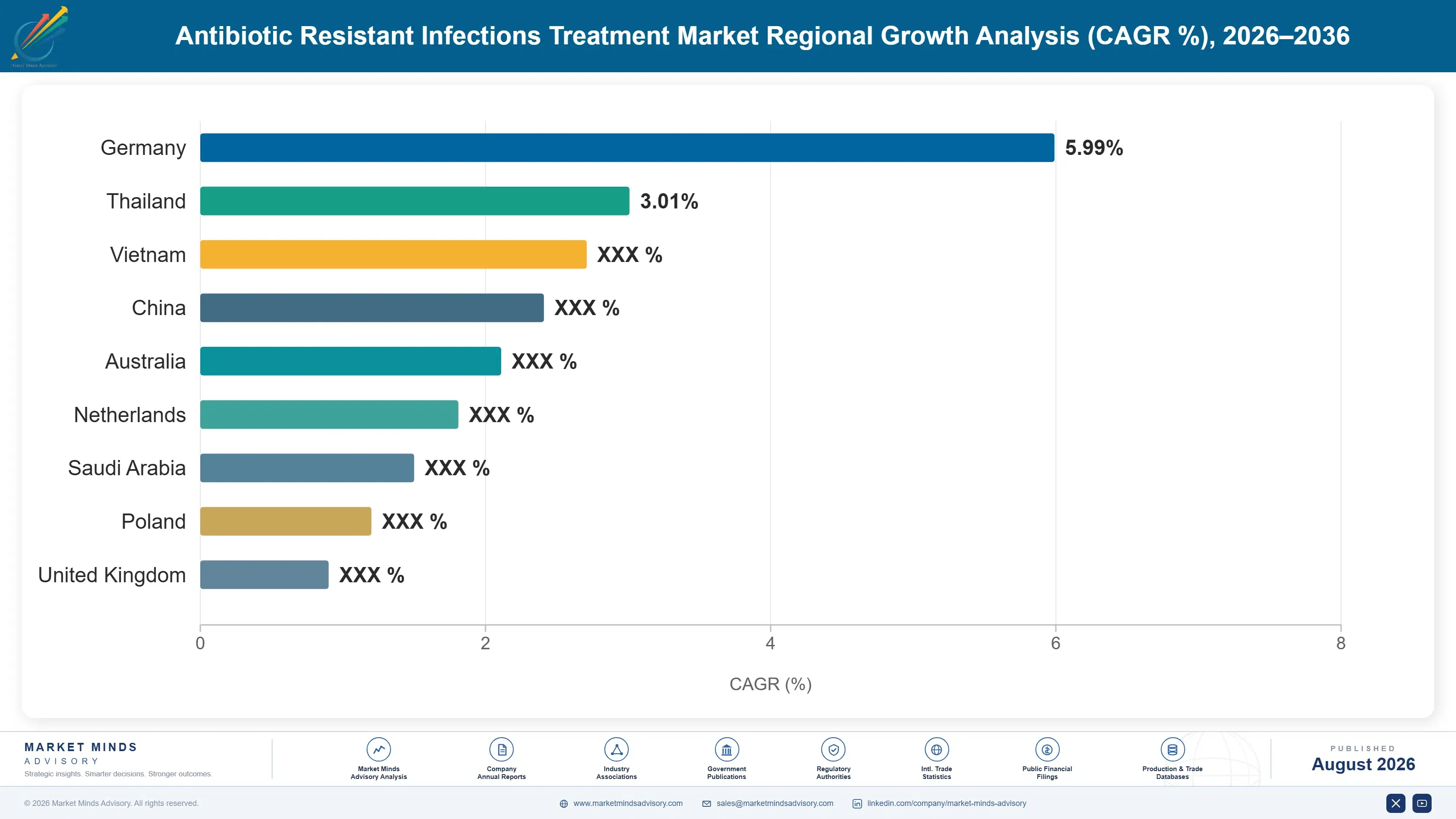
North America holds the largest share at 30% because reimbursement and novel agent pricing concentrate there, not because resistance burden does. East Asia follows on hospital volume, while South Asia and Pacific grows fastest and carries the heaviest clinical load worldwide. Value and burden diverge sharply here.
North America
Value concentrates here because reimbursement does, not because resistance is worst. American hospitals pay novel agent prices that no other system matches, and that pricing supports whatever commercial return the category generates globally. Legislative pull incentives have been introduced repeatedly in Congress without passing, leaving the market operating on conventional per-course reimbursement that stewardship then constrains. Federal push funding through BARDA and CARB-X supports development substantially, which has kept a pipeline alive that private capital alone would not sustain. Canadian access follows different pricing logic entirely. Regional growth of 7.8% depends heavily on whether payment reform eventually arrives legislatively. Federal push funding has kept a pipeline alive that private capital abandoned.
Share: 30% | CAGR: 7.8% (2026 to 2036)
Western Europe
The United Kingdom built the only functioning delinked payment model anywhere, paying fixed annual sums for guaranteed antibacterial access regardless of courses dispensed, and expanded it rather than abandoning it after the pilot. That arrangement is watched closely by every developer and by health systems elsewhere considering similar structures. European Union pharmaceutical legislation has proposed transferable exclusivity vouchers as a pull incentive, though the mechanism remains contested among member states and industry alike. Hospital stewardship programmes across the region are among the most developed globally, which constrains volume precisely as intended. Growth of 7.0% reflects careful use rather than any shortage of clinical need. Everyone else is watching how the British scheme performs.
Share: 22% | CAGR: 7.0% (2026 to 2036)
Regional intelligence for 5 additional markets available in the complete report: East Asia, South Asia and Pacific, Latin America, Middle East and Africa, Eastern Europe. Contact sales@marketmindsadvisory.com.

Where Antibacterial Developers Can Actually Earn
Selling courses of a drug that stewardship correctly restricts is a business model that has bankrupted several companies already. The four moves below detach revenue from volume: subscription contracting, portfolio absorption inside larger companies, diagnostic pairing that targets use, and access structures that convert burden geography into something other than charity. None of the four requires a new molecule.
Pursue Subscription Contracts Ahead of Per-Course Reimbursement
Delinked arrangements paying fixed annual sums for guaranteed availability remove the contradiction between stewardship and revenue entirely, and the United Kingdom scheme has moved from pilot to standing practice with contracts awarded to several developers. Securing one provides revenue certainty that per-course reimbursement cannot, typically worth $12 million to $25 million annually per agent per participating system. Positioning requires engagement with health technology assessment bodies years before approval. Developers who waited until launch found the assessment process considerably slower than their remaining runway allowed. Assessment processes move slower than most remaining runways allow.
Market Impact: Delivers $12 to $25 million annually per system
Transfer Commercialisation to Partners at Approval
Roughly 38% of developers reaching approval enter insolvency within four years, and the failure point is almost always commercialisation rather than science. Structuring partnership or licensing arrangements that transfer launch and market access to a company able to absorb antibacterial economics inside a broader portfolio converts a likely bankruptcy into a milestone and royalty stream. Terms typically deliver 8% to 15% royalties plus approval milestones. It is a smaller outcome than independent commercialisation and considerably larger than what most independent commercialisation has actually produced. The theoretical outcome and the observed outcome differ considerably here.
Market Impact: Converts insolvency risk to 8 to 15% royalties
Pair Novel Agents With Rapid Susceptibility Diagnostics
Roughly 71% of treatment is initiated empirically before susceptibility results are available, which pushes clinicians toward familiar broad-spectrum choices and delays appropriate use of targeted novel agents. Partnering with rapid diagnostic developers, and funding health system deployment where necessary, gets the right patients identified while the treatment decision is still open. Sites with rapid testing show appropriate novel agent use roughly 30% higher than those without. The investment supports the stewardship case simultaneously, which matters when negotiating formulary access. Stewardship committees respond to targeting evidence more readily than to efficacy claims alone.
Market Impact: Lifts appropriate novel agent use by roughly 30%
Structure Tiered Access Across High-Burden Geographies
India and Sub-Saharan Africa carry the heaviest resistant infection burden and the least ability to pay Western prices, and treating those markets as charitable exclusions forgoes both revenue and epidemiological influence. Tiered pricing with volume commitments, local manufacturing partnerships, and participation in access initiatives converts them into modest but real revenue while building the surveillance data that supports regulatory and payer arguments elsewhere. Programmes structured this way typically contribute 4% to 9% of agent revenue while shaping resistance data that informs global positioning considerably. Surveillance visibility is worth more than the revenue line suggests.
Market Impact: Adds 4 to 9% of total agent revenue
Who Controls the Margin Pool
The top five hold roughly 47% of revenue, measured consistently as manufacturer net revenue from agents used against resistant organisms. Pfizer, Merck, Shionogi, GSK, and AbbVie remain because each can carry antibacterial economics inside a far larger business rather than because antibacterials are attractive standalone. Specialist developers including Melinta, Innoviva, and Venatorx occupy space where several predecessors failed after approval.
Competition runs along three lines that look unusual for pharmaceuticals. Payer engagement is the first, since securing a subscription arrangement matters more than any commercial launch capability. Portfolio absorption capacity is the second, determining whether a company can hold an agent through years of restricted use. The third is pipeline position against World Health Organization priority pathogens, which shapes push funding eligibility and partnership interest more than conventional market sizing does.
Two pressures will reshape positions. Legislative pull incentives, if they pass in the United States or European Union, would restore late-stage development economics and change who can participate. Meanwhile Indian and Chinese manufacturers keep developing agents targeting resistant organisms at price points Western developers cannot approach. The exposed position is a specialist developer holding an approved agent, no subscription contract, and no partner.

Competitive Moat and Risk Dimensions
Moat: Portfolio Absorption and Global Access
Pfizer can hold antibacterial agents through years of restricted use because they represent a rounding error against a portfolio spanning many therapeutic areas, which is a capability no specialist developer possesses. Global market access infrastructure lets it launch across dozens of jurisdictions simultaneously. That is why several agents originated elsewhere ended up commercialised here rather than by their developers.
Risk: Antibacterial Portfolio Deprioritisation
The same portfolio breadth that allows absorption also means antibacterials compete internally against oncology and vaccine programmes with far larger commercial returns, and internal capital allocation reflects that. Development commitment has narrowed across the industry for exactly this reason. Reliance on large companies to sustain the category is therefore reliance on a decision they could reverse without much difficulty.
Moat: Sustained Antibacterial Development Commitment
Shionogi has maintained antibacterial research through decades when most companies exited, bringing cefiderocol through approval across multiple jurisdictions against organisms with very few remaining options. That persistence has produced regulatory relationships, clinical trial capability in resistant infection, and credibility with health systems that newer entrants cannot assemble quickly. The company also participates actively in access and subscription arrangements internationally.
Risk: Concentrated Antibacterial Exposure
A larger proportion of the company's commercial future rests on antibacterials than is true for its multinational peers, which means payment model reform matters far more to it than to companies able to absorb the category. If pull incentives fail to materialise in major markets, the exposure is direct. Diversification into other therapeutic areas is under way but remains partial.
Players Tracked
Prominent Players
Pfizer
Merck and Co.
Shionogi
GSK
AbbVie
Other Key Players
Melinta Therapeutics
Innoviva Specialty Therapeutics
Paratek Pharmaceuticals
Venatorx Pharmaceuticals
Basilea Pharmaceutica
Iterum Therapeutics
Spero Therapeutics
Bugworks Research
Locus Biosciences
Armata Pharmaceuticals
BiomX
Adaptive Phage Therapeutics
Wockhardt
Cipla
Sun Pharmaceutical Industries
Recent Developments
United Kingdom expands delinked antibacterial subscription arrangement
The United Kingdom extended its subscription payment scheme for antibacterial agents, awarding further contracts paying fixed annual sums for guaranteed availability regardless of dispensed volume. The expansion followed pilot evaluation and represents the only operating delinked payment model anywhere, closely watched by developers and health systems considering comparable structures elsewhere.
Signal: A payment model aligned with stewardship rather than against it is now proven rather than theoretical.
World Health Organization updates bacterial priority pathogen list
The World Health Organization published an updated bacterial priority pathogen list, retaining carbapenem-resistant Acinetobacter baumannii and Enterobacterales in the critical category and refining rankings across other organisms. The list shapes push funding eligibility, regulatory incentive qualification, and partnership interest well beyond its formal public health purpose.
Signal: Priority pathogen listing now functions as a commercial qualification criterion as much as a clinical one.
Phage therapy developers advance controlled trials for resistant infections
Several bacteriophage therapy developers progressed controlled clinical trials targeting resistant bacterial infections, moving beyond the compassionate access protocols under which most phage treatment has historically been provided. Regulatory pathways for personalised preparations differing between patients remain unsettled across major jurisdictions and unresolved by these trials.
Signal: Phage development is advancing faster than the regulatory framework that would eventually have to approve it.
Trials, Manufacturing, and Stewardship Constraints
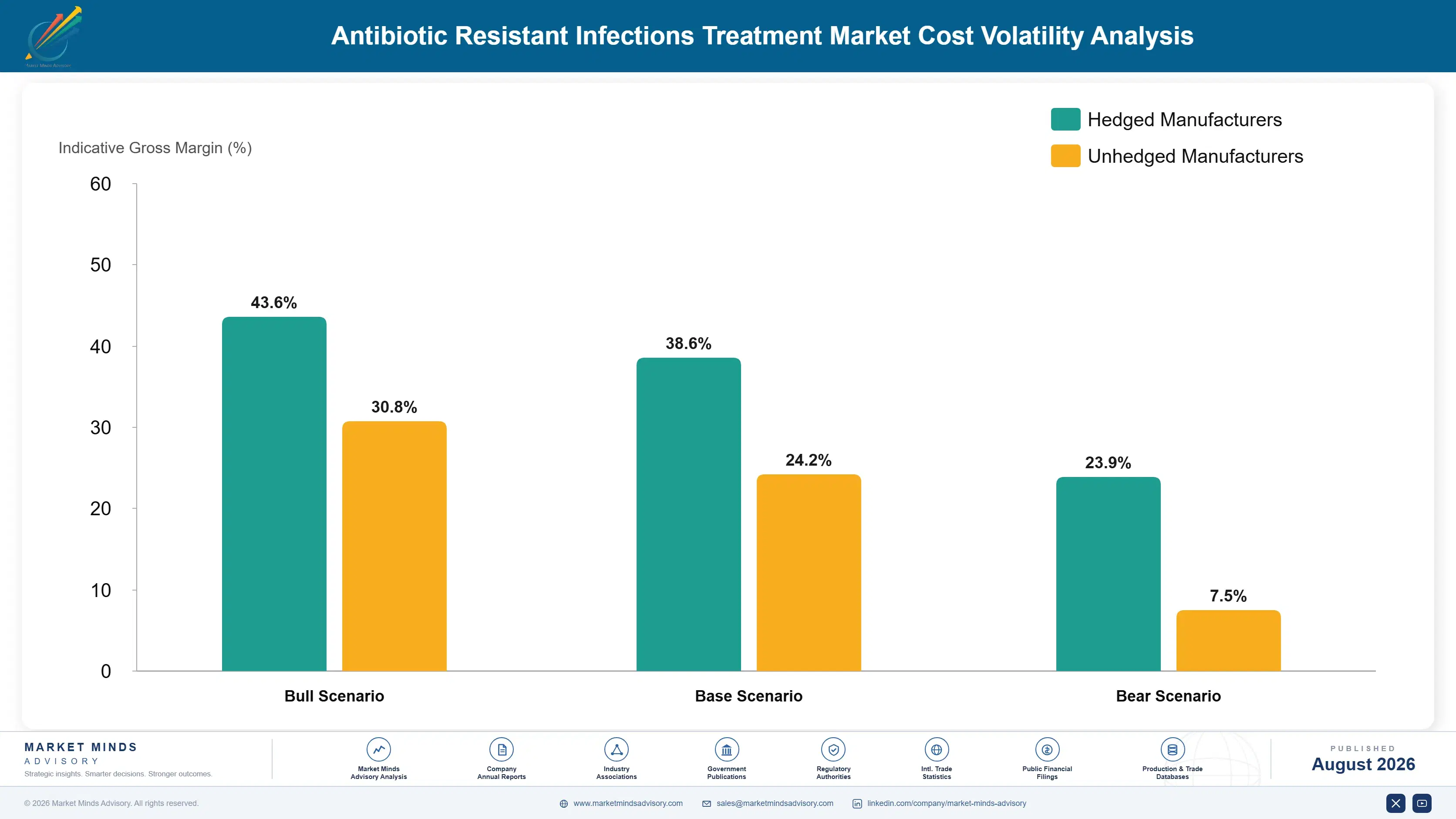
Clinical development dominates cost structure entirely, at roughly 61% of lifetime programme spend, and resistant infection trials are unusually expensive because eligible patients are scarce and geographically dispersed across many recruiting sites. Manufacturing and cost of goods contribute 14%, considerably higher for antibody and phage modalities than for small molecules. Regulatory affairs and pharmacovigilance take 9%, with market access absorbing the remainder.
Recruitment costs rose materially through 2021 to 2024 as site capacity went to other therapeutic areas and patient identification stayed dependent on slow susceptibility testing. Global health funders including CARB-X and the AMR Action Fund reported that development costs consistently exceeded programme assumptions. Basilea and Innoviva both referenced development and commercialisation cost pressure across their reporting, and several smaller developers halted programmes before completing registration studies.
Exposure varies with modality and with funding source rather than with company size. Small molecule developers using public push funding carried far less balance sheet risk than privately financed peers. Antibody and phage programmes face manufacturing costs that sit awkwardly against payer expectations formed on generics. Indian and Chinese developers operate at a fraction of Western trial and manufacturing cost, which is why their agents price where Western programmes cannot.

Secure push funding before committing private capital to late stages
Public and philanthropic funders including CARB-X, BARDA, and the AMR Action Fund provide non-dilutive capital that carries development risk private investors have largely withdrawn from in this category. Applying early and structuring programmes around funder priorities converts an unfinanceable programme into a fundable one. Developers treating this as a supplement rather than a foundation run short.
Design trials around sites with rapid susceptibility testing capability
Eligible patient identification depends on knowing an organism is resistant, and sites performing susceptibility testing slowly cannot recruit efficiently no matter how many patients they see. Concentrating recruitment at sites with rapid diagnostic capability, or funding that capability directly, cuts enrolment timelines materially. The cost of deploying testing is usually lower than the cost of an extended recruitment period.
Match modality selection to realistic payer cost expectations
Antibody and phage programmes carry cost of goods that sits uncomfortably against payer expectations formed on generic antibacterial pricing, and that mismatch will not be argued away at launch. Assessing achievable reimbursement against modality cost structure before committing to late-stage development avoids a problem that cannot be fixed afterwards. Several programmes discovered this only after registration studies completed.
Portfolio Architecture for Margin Defence
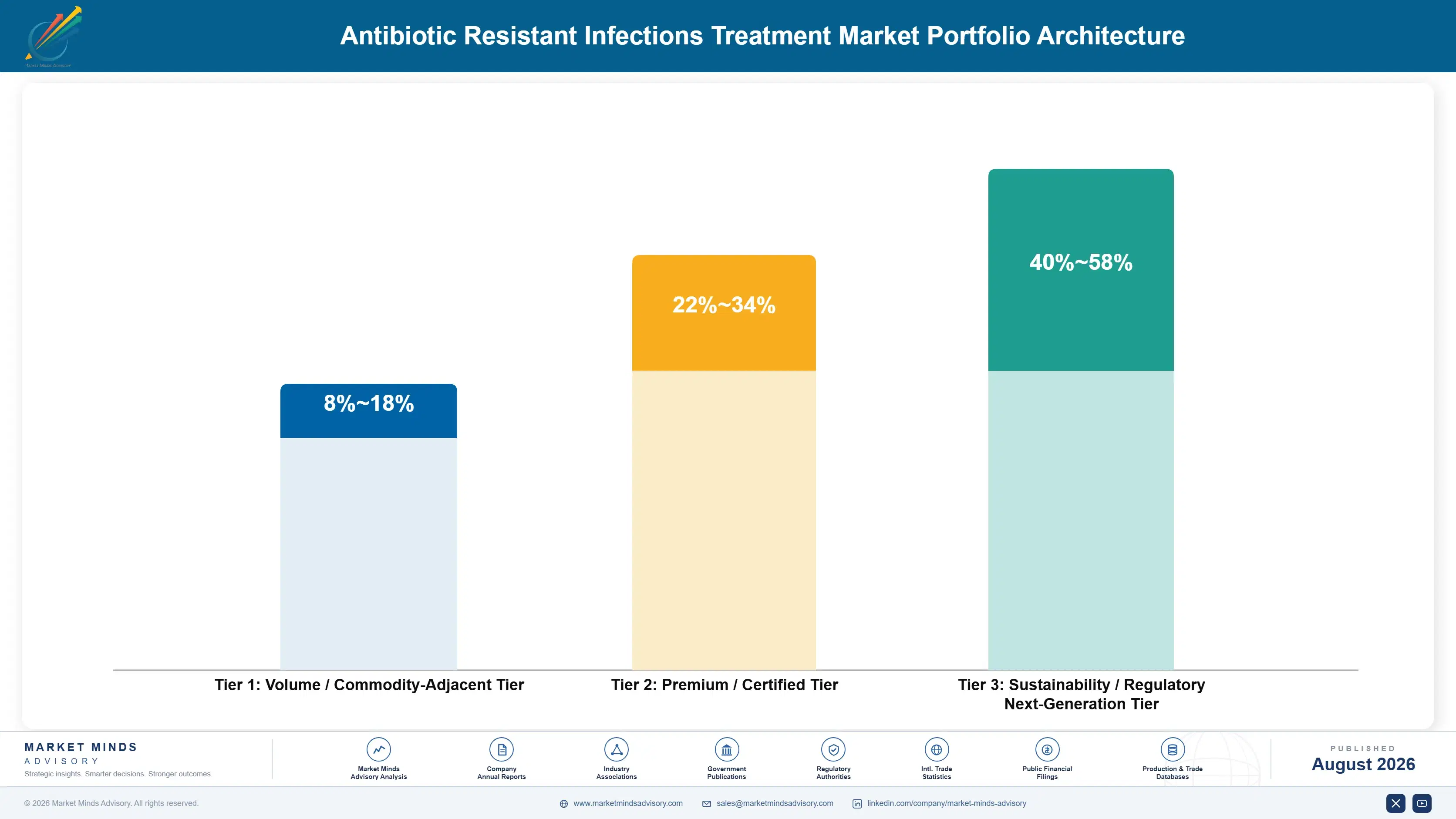
Three tiers separate on how revenue is generated rather than on clinical value. Legacy agents including polymyxins and generic combinations earn 8% to 18%, sold at low prices into wide use with no development cost left to recover. Novel agents on conventional per-course reimbursement earn 22% to 34%, constrained by stewardship limiting the volume that supports the price. Subscription-contracted and partnership-royalty positions earn most, because revenue arrives independently of how little the agent is used.
The tension here is the sharpest in pharmaceuticals. Every other category rewards prescribing growth, and this one penalises it, which means the commercial function is asking clinicians to buy access rather than treatment. Developers who staffed and structured for conventional launch found the model did not apply, and several discovered it after committing the spend. The companies performing best treat market access and payer engagement as the primary commercial activity and field sales as secondary.
High-value pools sit where payment has been detached from volume. Subscription contracts, partnership royalties, and push-funded development all generate returns that stewardship cannot erode, which is exactly why they are the only sustainable positions in a category that otherwise punishes appropriate use.
Volume / Commodity-Adjacent Tier
Polymyxins, generic combinations, and legacy agents sold widely at low prices with development costs long since recovered. Competes on price against multiple generic suppliers. The wide range reflects large differences in manufacturing cost position and regional pricing between suppliers.
Gross Margin: 8%-18%
Premium / Certified Tier
Novel agents reimbursed per course under conventional hospital purchasing, priced high but constrained by stewardship restricting volume. Range width separates agents with broad formulary acceptance from those held in narrow reserve within the same tier.
Gross Margin: 22%-34%
Sustainability / Regulatory / Next-Generation Tier
Subscription-contracted agents, partnership royalty positions, and push-funded development where revenue is detached from dispensed volume entirely. Payment structure rather than clinical differentiation sustains the economics throughout this tier across the forecast period.
Gross Margin: 40%-58%

High-value Sub-segments and Strategic Watch-out
Subscription-Contracted Agent Supply
Highest value in the market because revenue arrives regardless of dispensed volume, removing the contradiction that has bankrupted developers. Worth $12 million to $25 million annually per agent per participating system. Payer engagement years before approval is the entry requirement. Nothing else in the category removes that contradiction.
Gross Margin: 48%-58%
Partnership Royalty Positions
High value and increasingly the rational outcome for specialist developers, converting a likely insolvency into 8% to 15% royalties plus milestones. Smaller than independent commercialisation in theory and considerably larger than what independent commercialisation has actually delivered. Most specialist developers should be planning for this outcome.
Gross Margin: 42%-54%
Novel Agents on Per-Course Reimbursement
The conventional core and the position that has failed repeatedly, since stewardship correctly restricts the volume the pricing depends upon. Viable only inside a portfolio large enough to absorb it. Specialist developers should not attempt it alone. Portfolio absorption capacity is the only thing making it work.
Gross Margin: 24%-34%
Legacy Polymyxin and Generic Agents
The strategic watch-out. Volume persists on cost grounds in budget-constrained systems while newer combinations displace it wherever formularies and diagnostics permit. The 2.4% contraction understates how quickly clinical preference has already moved away. Nephrotoxicity was always the reason clinicians avoided these agents. Displacement is accelerating quietly.
Gross Margin: 6%-16%
Why Formulary Positions Persist Quietly
Revenue in this category behaves as an annuity in an unusual way, because what persists is a formulary position rather than a prescribing habit. Once a hospital pharmacy and therapeutics committee has reviewed an agent, written it into a treatment protocol, and defined the stewardship criteria releasing it, that position holds for years without generating much volume at all. Typical formulary tenure runs six to nine years, and the access work behind the original listing is what buys it.
Stickiness varies with how the agent entered. Subscription-contracted agents are the most durable, since the contract itself defines the relationship and renewal is a health system decision rather than a prescribing one. Protocol-embedded novel agents come next, protected by the effort required to revise a treatment guideline. Legacy generic agents are the least sticky, switching between suppliers on tender price with no clinical attachment whatsoever to any particular manufacturer.
Buyer profiles have changed considerably. Stewardship pharmacists and microbiologists now hold effective veto over formulary additions, and their questions concern resistance selection pressure rather than efficacy or price. Selection pressure arguments now carry more weight in a listing decision than pricing does.

Where Antibacterial Capital Belongs
These are among the four positions where our research anticipates prominent divergence between winners and laggards over the coming forecast period. Each is grounded in the demand model, the regulatory perimeter, and the announced capacity pipeline.
Chase delinked payment before chasing prescriptions anywhere
Arrangements paying fixed annual sums for guaranteed availability remove the contradiction between stewardship and revenue that has bankrupted roughly 38% of developers reaching approval in this category. The United Kingdom scheme has moved from pilot to standing practice with contracts worth $12 million to $25 million annually per agent per participating system, and other health systems are watching it closely. Positioning requires health technology assessment engagement years before approval, and developers who waited until launch found the process slower than their runway.
Hand launch to someone who can absorb the economics
Approval no longer predicts commercial survival in this category, and the failure point is almost always commercialisation rather than the science or regulatory execution. Transferring launch and market access to a company able to carry antibacterial economics inside a broad portfolio converts a probable insolvency into milestones plus royalties of 8% to 15%. That is a smaller theoretical outcome than independent commercialisation and considerably larger than what independent commercialisation has actually delivered to most of the developers who have actually attempted it.
Fund rapid testing, because empiric prescribing bypasses your agent
Roughly 71% of all treatment starts empirically before susceptibility results exist, which pushes clinicians toward familiar broad-spectrum choices and means a targeted novel agent is frequently never even considered. Partnering with rapid diagnostic developers, and funding deployment across key health systems where necessary, identifies the right patients while the treatment decision still remains genuinely open. Sites operating rapid testing show appropriate novel agent use roughly 30% higher, and the same investment strengthens the stewardship case considerably during any formulary negotiation.
Serve high-burden geographies commercially, not as charity
India and Sub-Saharan Africa carry the heaviest resistant infection burden and the least capacity to pay Western prices, and excluding them forgoes revenue alongside the surveillance data that shapes regulatory and payer arguments everywhere else. Tiered pricing with volume commitments, local manufacturing partnerships, and access initiative participation typically contributes between 4% and 9% of total agent revenue. The epidemiological visibility gained is worth more than that figure suggests, because resistance data drawn from high-burden settings informs global positioning very directly.
Engagement Snapshot From the Field
A live engagement with an industry participant carrying material or product regulatory and market exposure ahead of a defining policy shift, showing how our research translates into a defensible multi-year portfolio strategy.
MARKET MINDS ADVISORY · CLIENT ENGAGEMENT SUMMARY
Antibiotic Resistant Infections Treatment Producer Strategic Portfolio Review and Transition Roadmap 2026·Investment Scenario on Antibiotic Resistant Infections Treatment Exposure Evaluation 2025-26
CLIENT PROFILE
A European clinical-stage antibacterial developer with one agent approved in two jurisdictions and a second candidate in registration studies, with annual revenue near EUR 31 million against operating costs considerably higher (client-reported, unverified by MMA). The company had built a hospital sales organisation for independent commercialisation, held no subscription contracts, and had roughly nineteen months of cash runway remaining at the engagement start.
STRATEGIC CHALLENGE
Per-course sales of the approved agent were running at less than a third of the internal launch forecast, because stewardship committees were correctly reserving it for confirmed resistant isolates. The sales organisation cost more than the revenue it generated, the second candidate needed funding to complete registration, and the board faced a choice between punitive equity or restructuring the commercial model.
MMA APPROACH
MMA rebuilt commercial economics by market, separating what field sales generated from what formulary listing alone would have produced. Subscription contract opportunities were assessed across health systems operating or considering delinked models. Partnership and licensing structures were benchmarked against comparable transactions. Push funding eligibility was reviewed against the second candidate profile, with findings tested through 47 expert interviews during Q4 2025.
KEY FINDINGS
- Field sales activity accounted for an estimated 11% of prescriptions written, with the remainder driven by formulary listing and stewardship protocol placement the organisation did not influence.
- The approved agent qualified for subscription arrangement consideration in two health systems, and neither had been approached because commercial resource was directed at prescriber activity.
- Comparable licensing transactions for approved antibacterials delivered upfront payments plus royalties of 9% to 14%, which exceeded the net present value of the client's independent commercialisation plan.
- The second candidate matched two World Health Organization critical priority pathogens, making it eligible for push funding the company had not applied for at all.
CLIENT PROFILE
A European clinical-stage antibacterial developer with one agent approved in two jurisdictions and a second candidate in registration studies, with annual revenue near EUR 31 million against operating costs considerably higher (client-reported, unverified by MMA). The company had built a hospital sales organisation for independent commercialisation, held no subscription contracts, and had roughly nineteen months of cash runway remaining at the engagement start.
STRATEGIC CHALLENGE
Per-course sales of the approved agent were running at less than a third of the internal launch forecast, because stewardship committees were correctly reserving it for confirmed resistant isolates. The sales organisation cost more than the revenue it generated, the second candidate needed funding to complete registration, and the board faced a choice between punitive equity or restructuring the commercial model.
MMA APPROACH
MMA rebuilt commercial economics by market, separating what field sales generated from what formulary listing alone would have produced. Subscription contract opportunities were assessed across health systems operating or considering delinked models. Partnership and licensing structures were benchmarked against comparable transactions. Push funding eligibility was reviewed against the second candidate profile, with findings tested through 47 expert interviews during Q4 2025.
KEY FINDINGS
- Field sales activity accounted for an estimated 11% of prescriptions written, with the remainder driven by formulary listing and stewardship protocol placement the organisation did not influence.
- The approved agent qualified for subscription arrangement consideration in two health systems, and neither had been approached because commercial resource was directed at prescriber activity.
- Comparable licensing transactions for approved antibacterials delivered upfront payments plus royalties of 9% to 14%, which exceeded the net present value of the client's independent commercialisation plan.
- The second candidate matched two World Health Organization critical priority pathogens, making it eligible for push funding the company had not applied for at all.
RECOMMENDED STRATEGY
Phase 1: Phase 1 (months one to five): disband the hospital field organisation, redirect resource to market access, and open subscription discussions in two health systems. Phase 2: Phase 2 (months six to sixteen): pursue a commercialisation partnership for the approved agent while applying for push funding on the second candidate. Phase 3: Phase 3 (months seventeen to twenty-eight): complete registration studies under non-dilutive funding and structure the second agent for partnership at approval.
OUTCOME
The developer restructured its commercial organisation and reported operating cost falling 34% within eleven months while prescription volumes held broadly flat (client-reported, unverified by MMA). One subscription discussion has reached contract negotiation. Push funding was awarded for the second candidate and a licensing process is under way.
Frequently Asked Questions
Foundational context covering the market sizes, CAGR, scope, country, region and competition that inform every finding below. This section is provided to cover basics and most often pre-purchase conversations, answered from the MMA Primary Research Dataset.
What is the current size of the Antibiotic Resistant Infections Treatment Market?
The market was valued at USD 6.40 billion in 2025, rising to an estimated USD 6.94 billion in 2026. North America holds the largest regional share at 30% of global value.
How large will the Antibiotic Resistant Infections Treatment Market be by 2036?
MMA forecasts USD 15.54 billion by 2036 under the base case, an expansion multiple of 2.24 times the 2026 level. Incremental value creation across the period reaches USD 8.60 billion.
What is the CAGR for the Antibiotic Resistant Infections Treatment Market 2026 to 2036?
The base case CAGR is 8.4%, with a bull case of 9.7% and a bear case of 7.1%. Historical growth between 2020 and 2025 ran at 7.2%, mostly from established combination agents.
Which segment is growing fastest?
Bacteriophage therapies, at 26.4%, roughly 3.14 times the overall market rate. The figure describes development activity rather than commercial trade, since revenue remains negligible today.
Who are the major companies in the Antibiotic Resistant Infections Treatment Market?
Pfizer, Merck and Co., Shionogi, GSK, and AbbVie lead, holding roughly 47% of revenue between them. Each carries antibacterial economics inside a considerably larger business.
Which country is growing fastest?
India, at 11.8%, driven by the heaviest documented resistant infection burden anywhere alongside improving hospital purchasing capability and domestic manufacturers developing targeted agents at affordable price points.
Report Segmentation Architecture
The full report scope spans multiple orthogonal segmentation dimensions, with cross-tabulated demand data provided for each dimension pair. Coverage extends further to regional breakdowns, trend trajectories, and the competitive detail needed to support segment-level decision-making.
By Therapeutic Modality
- Beta-Lactam and Beta-Lactamase Inhibitor Combinations
- Novel Non-Beta-Lactam Small Molecule Antibiotics
- Polymyxins and Legacy Agents
- Bacteriophage Therapies
- Monoclonal Antibodies and Immunotherapeutics
- Antimicrobial Peptides and Novel Modalities
By End-Use Industry
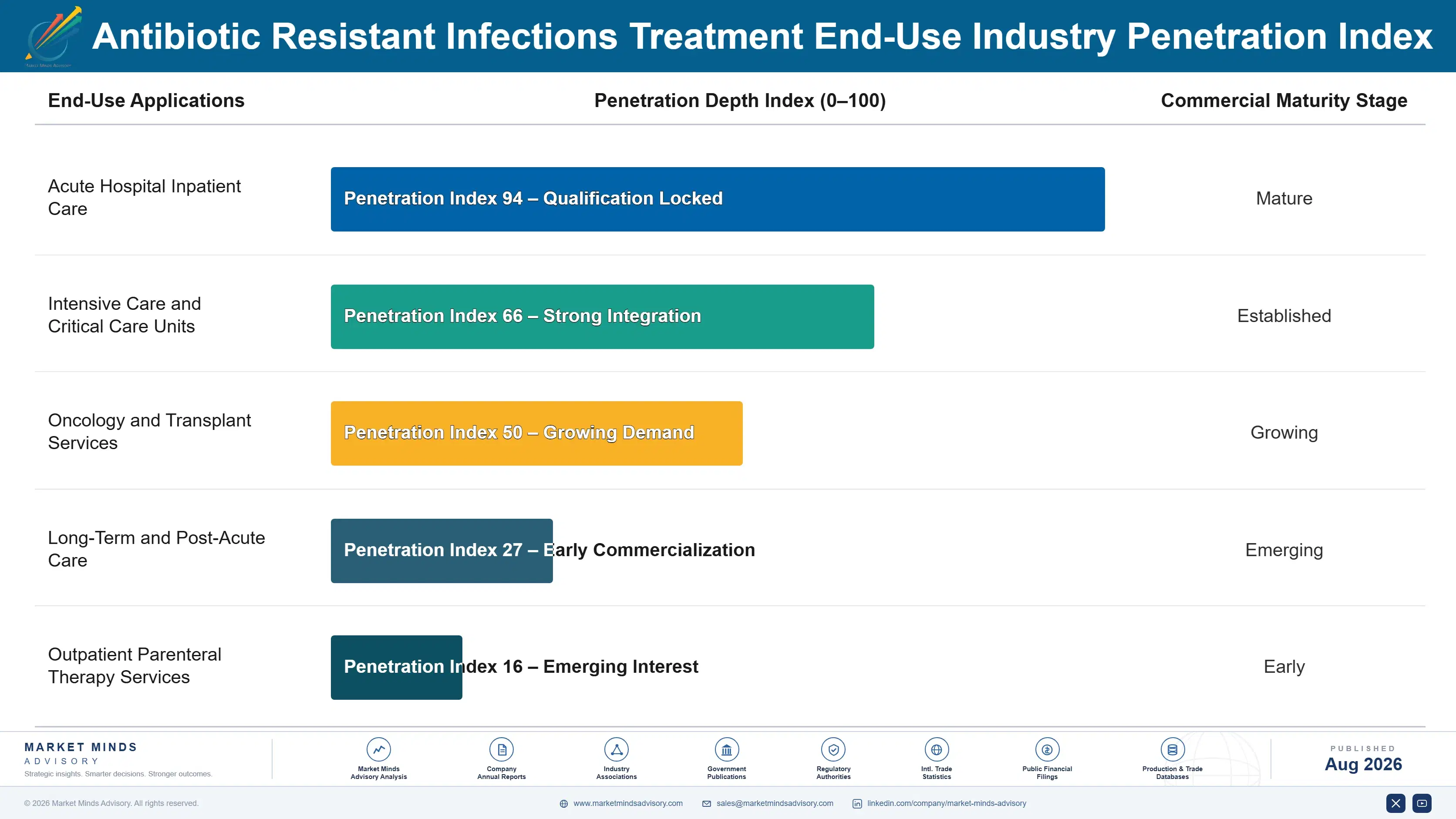
- Acute Hospital Inpatient Care
- Intensive Care and Critical Care Units
- Oncology and Transplant Services
- Long-Term and Post-Acute Care
- Outpatient Parenteral Therapy Services
By Commercial Dimension
- Conventional Per-Course Reimbursement
- Subscription and Delinked Payment Contracts
- Partnership and Licensing Arrangements
- Public and Global Health Procurement
By Region
- North America
- Western Europe
- East Asia
- South Asia and Pacific
- Latin America
- Middle East and Africa
- Eastern Europe
Scope, Methodology, and Coverage
Every figure in this report is reproducible from documented input assumptions. The scope below maps the historical period, the forecast horizon, the segmentation dimensions, and the countries covered, alongside the underlying primary and qualitative methodology.
Historical Period
2020 to 2025
Forecast Period
2026 to 2036
Base Year
2025 (USD billions; MMA Primary Research Dataset, August 2026)
Market Definition
The market comprises therapeutics used to treat infections caused by antibiotic-resistant bacteria, covering beta-lactam and beta-lactamase inhibitor combinations, novel non-beta-lactam small molecule antibiotics, polymyxins and legacy agents, bacteriophage therapies, monoclonal antibodies and immunotherapeutics, and antimicrobial peptides and other novel modalities. Value is measured at manufacturer net revenue across hospital and outpatient settings. Diagnostics, infection prevention products, vaccines, antifungals, antivirals, and antibacterials used exclusively against susceptible organisms fall outside scope.
Quantitative Units
USD billions (manufacturer net revenue, current prices); treatment courses; USD per course of therapy
Segmentation Dimensions
By Therapeutic Modality; By End-Use Industry; By Commercial Dimension; By Region
Regions Covered
North America, Western Europe, East Asia, South Asia and Pacific, Latin America, Middle East and Africa, Eastern Europe
Countries Covered
USA, China, Germany, France, UK, Japan, South Korea, India, Australia, Canada, Brazil, Mexico, Indonesia, Vietnam, Thailand, Malaysia, UAE, Saudi Arabia, South Africa, Nigeria, Turkey, Poland, Netherlands, Italy, Spain, Sweden, Switzerland, Argentina, Colombia, Singapore, and additional markets relevant to this sector
Key Companies Profiled
Pfizer, Merck and Co., Shionogi, GSK, AbbVie, Melinta Therapeutics, Innoviva Specialty Therapeutics, Paratek Pharmaceuticals, Venatorx Pharmaceuticals, Basilea Pharmaceutica, Iterum Therapeutics, Spero Therapeutics, Bugworks Research, Locus Biosciences, Armata Pharmaceuticals, BiomX, Adaptive Phage Therapeutics, Wockhardt, Cipla, Sun Pharmaceutical Industries
Quantitative Methodology
Primary survey, n=3,800 respondents, Q4 2025, six countries; demand-side model with trade association cross-validation
Qualitative Methodology
47 expert interviews, Q4 2025; applied to validate demand model assumptions, identify emerging dynamics, and assess competitive positioning
Report Format
PDF and XLSX data workbook (Word format preview document)
Publisher
Market Minds Advisory
Report Code
MMA-2026-HLT-119
Published
August 2026
Contact
sales@marketmindsadvisory.com | www.marketmindsadvisory.com
Purchase the full Antibiotic Resistant Infections Treatment Market Report (2026 to 2036).
The full report sizes resistant infection treatment demand across six therapeutic modalities and seven regions with 2026 to 2036 forecasts under base, bull, and bear cases. It models the gap between resistance burden and market value geography, quantifying where clinical need and reimbursement diverge most sharply. Competitive profiles cover twenty companies assessed consistently on manufacturer net revenue, portfolio absorption capacity, and payer engagement position. Payment model analysis covers subscription arrangements, proposed pull incentives, and push funding across jurisdictions. Commercial guidance addresses subscription pursuit, partnership structuring, diagnostic pairing, and tiered access design.
Six therapeutic modalities sized and forecast separately
Resistance burden mapped against market value by geography
Twenty company profiles on consistent net revenue basis
Subscription and pull incentive schemes compared across jurisdictions
Post-approval developer outcomes tracked across recent launches
Push funding eligibility mapped against priority pathogen listings
Built For The People Who Decide
From boardroom strategy to bench-side execution, this report is read cover-to-cover by leaders shaping the next decade of their industry, turning demand scenarios, market dynamics and valuation benchmarks into decisions.
CXOs/ Presidents/ VPs/ Managers
M&A and Corporate Development
Strategy Teams and R&D Heads
Procurement and Product Directors
Regulatory and Compliance Leaders
Investor Relations and Equity Analysts