
Market Minds Advisory
4-Benzoylbutyric Acid Market

4-Benzoylbutyric Acid Market: Antihistamine Intermediate Demand and the China Sourcing Concentration

4-Benzoylbutyric acid demand now tracks antihistamine generic manufacturing cycles closely, while buyer sourcing diversification away from concentrated Chinese fine chemical production is colliding with limited qualified alternative capacity across other manufacturing regions.

Lead Analyst

Bilal Shaikh

Published

September 2026

Make Smarter Decisions with Customized Research Insights

Request a free sample report and evaluate market opportunities, growth trends, and competitive dynamics relevant to your business needs.

2025 MARKET VALUE$0.1BMarket Size 2025
2036 FORECAST VALUE$0.2BBase Case , 2026 to 2036
CAGR 2026 TO 20366.4 %Bull 7.7% / Bear 5.1%
INCREMENTAL OPPORTUNITY$0.1BNet 10- year value creation
EXPANSION MULTIPLE1.86x2036 value over 2026 base
Strategic Levers
M&A Pipeline
Regional Outlook
Country Rankings
Competitive Intelligence
Segmental Deep-dive
Call-Us : 91 93563 13602

Executive Snapshot and Market Trajectory

Pharmaceutical formulators are pushing 4-benzoylbutyric acid buyers toward supply diversification faster than qualified alternative manufacturing capacity outside China can scale, creating a widening gap between sourcing policy ambition and commercially available second-source supply. Few producers currently serve both segments equally well. Resourcing choices increasingly define which producers ultimately succeed here.
Broader pharmaceutical API intermediate applications are pulling category growth ahead of the compound's traditional antihistamine synthesis role, as contract manufacturers increasingly qualify the molecule for additional synthesis pathways beyond fexofenadine and terfenadine production. East Asia commands the overwhelming majority of global production through China's fine chemical manufacturing base, while India scales fastest as pharmaceutical companies pursue geographic sourcing diversification. That base continues expanding steadily each year.
Competitive structure remains moderately concentrated among specialty fine chemical producers and contract manufacturing organizations, with the top five holding meaningful combined share. Buyer pressure for second-source qualification is compounding competitive intensity, pushing established Chinese producers toward capacity expansion while newer Indian and European entrants race to complete customer qualification processes that typically span multiple years. Rankings among established producers could shift meaningfully as this diversification widens further. Timing matters greatly here.
Market Definition
The 4-benzoylbutyric acid market covers commercial production and sale of 4-benzoylbutyric acid, primarily used as a synthesis intermediate for antihistamine active pharmaceutical ingredients including fexofenadine and terfenadine, along with fragrance, agrochemical, and research reagent applications. It excludes finished formulated antihistamine pharmaceutical products and excludes downstream synthesis intermediates derived from 4-benzoylbutyric acid rather than the compound itself.
Base Year Value
$0.1B in 2025 (MMA Primary Research Dataset, August 2026)
Forecast Period
2026 to 2036, eleven discrete annual values
CAGR
6.4% base case. Bull 7.7%. Bear 5.1%.
Fastest Growth Segment
Other Pharmaceutical API Intermediate Applications: 8.5% CAGR
Fastest Growth Country
India: 8.2% CAGR
Fastest Growth Region
South Asia and Pacific: 8.4% CAGR
Largest Region
East Asia: 34% of 2025 global value
Market Leaders
Lonza Group, Cambrex Corporation, Siegfried Holding, Divi's Laboratories, and Jubilant Pharmova. Source: MMA Analysis based on company annual reports.
Primary Survey
n=3,800 procurement and R&D decision-makers, Q4 2025, six countries
Methodology
Demand-side build-up, cross-validated against public data, 47 expert interviews

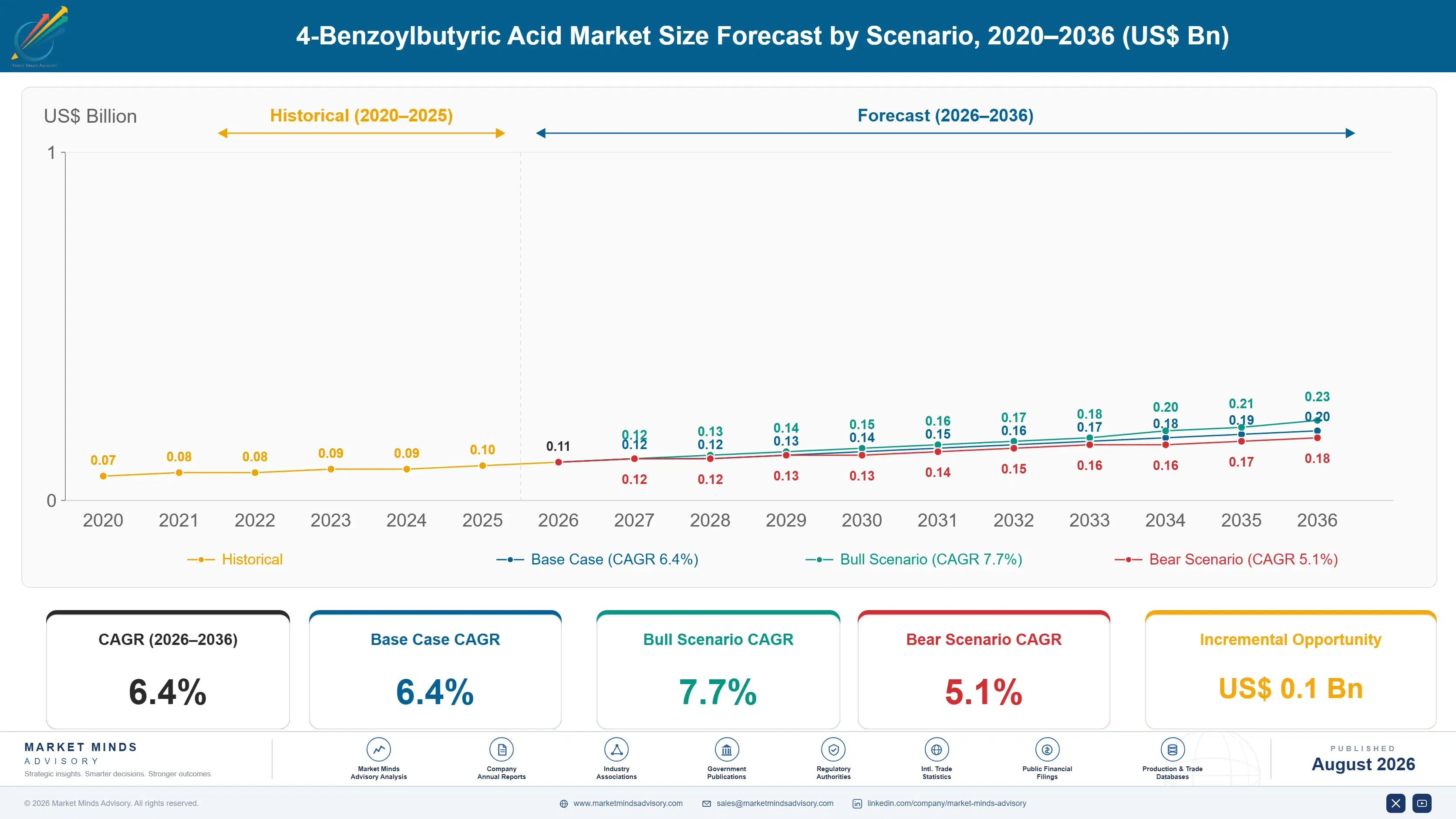
4-Benzoylbutyric Acid Market Forecast Scenarios

4-benzoylbutyric-acid-market-trends-size-forecast-scenario-1787464211121
Between 2020 and 2025 the market grew at a historical pace of roughly 5.4 percent annually, as steady generic antihistamine manufacturing demand provided a stable base while buyer interest in supply chain diversification away from concentrated Chinese production began accelerating only in the final two years of the period following broader pharmaceutical supply chain disruption concerns. Buyer sentiment shifted noticeably following this period.
The base case assumes growth near 6.4 percent annually through 2036, anchored in three commercial mechanisms: expanding pharmaceutical API intermediate applications beyond traditional antihistamine synthesis, continued generic antihistamine manufacturing volume growth across major consuming markets, and buyer-driven second-source qualification investment that is gradually building alternative manufacturing capacity outside China's dominant production base. These mechanisms increasingly reinforce each other as buyers, regulators, and producers coordinate more closely around shared qualification standards.
A bull scenario builds on faster Indian and European second-source qualification enabling meaningful buyer diversification away from Chinese concentration, while a bear scenario centers on continued antihistamine generic pricing pressure compressing intermediate demand growth and slowing planned capacity expansion among alternative manufacturing entrants. Several producers are already preparing contingency capacity plans to address either scenario.

Sourcing Diversification Racing Qualification Timelines

Three forces are converging on the category at once: pharmaceutical buyers are demanding second-source qualification to reduce geographic concentration risk, contract manufacturers are expanding qualification of the molecule into additional synthesis pathways beyond antihistamine production, and Chinese producers are expanding capacity to defend share as alternative manufacturing entrants pursue customer qualification. This convergence is compressing decision timelines that once unfolded over multiple planning cycles.
MARKET CONCENTRATIONCR5 46%top five producers hold a substantial combined share
AVERAGE PURITY GRADE98-99.5%typical purity specification required for pharmaceutical synthesis overall
LEADING PRODUCING COUNTRYChinalargest single national production and export base overall
SECOND-SOURCE QUALIFICATION RATE24%share of buyers with a qualified alternative supplier
ANTIHISTAMINE APPLICATION SHARE58%share of total volume consumed in antihistamine synthesis
TOLUENE FEEDSTOCK COST SHARE41% of COGSprimary petrochemical feedstock as portion of total cost
Commercially the category behaves less like a simple commodity chemical purchase and more like a qualification-gated relationship business, since a buyer's ability to switch suppliers depends heavily on multi-year regulatory and quality qualification processes rather than price alone, giving incumbent qualified suppliers durable relationship advantages that new entrants struggle to overcome quickly. Buyers increasingly select suppliers based on documented qualification history alone.
Over the next decade, producers most likely to capture disproportionate value are those investing early in the documentation and quality systems pharmaceutical buyers require for qualification, since completing this process ahead of competitors secures multi-year supply relationships that later entrants find difficult to displace once established. Producers slow to invest risk losing qualification opportunities to better-prepared competitors. Early movers already report stronger buyer retention.
"This is a molecule where the chemistry is simple and the qualification file is not. Buyers aren't shopping for the cheapest kilogram, they're shopping for whoever can survive their quality audit fastest."
Director, Specialty and Fine Chemicals Practice · MMA Specialty Chemicals / Pharmaceutical Intermediates Practice · August 2026

Market Trends

Pharmaceutical Buyers Actively Pursuing Second-Source Qualification

Major generic antihistamine manufacturers are increasingly requiring qualified second-source suppliers for 4-benzoylbutyric acid as part of broader pharmaceutical supply chain resilience policies adopted following recent disruption to concentrated single-region sourcing across multiple active pharmaceutical ingredient categories. Several large generic manufacturers have completed or initiated second-source qualification with Indian and European producers within the past two years, signaling the trend has moved beyond policy statements into active commercial qualification activity. Qualification timelines typically span eighteen to thirty-six months, creating a persistent lag between buyer intent and realized supply diversification. Buyers increasingly treat documented second-source status as a baseline procurement requirement.
Market Impact: Lifts antihistamine intermediate demand 5%
Expanding Pharmaceutical Intermediate Applications Beyond Antihistamines

Contract manufacturing organizations are increasingly qualifying 4-benzoylbutyric acid for synthesis pathways beyond its traditional antihistamine role, incorporating the compound into research programs targeting other therapeutic categories where its specific molecular structure offers useful synthesis intermediate properties. This diversification is gradually reducing the category's historical dependence on antihistamine market cycles specifically, spreading demand across a broader base of pharmaceutical development programs that are less correlated with any single therapeutic category's commercial performance or patent cycle timing. Producers serving this diversified base increasingly report more stable, less cyclical revenue patterns overall. Growth here should keep outpacing traditional antihistamine synthesis.
Market Impact: Adds 8% to diversification-driven demand

Market Opportunities and Growth Drivers

Generic Antihistamine Manufacturing Volume Growth Worldwide

Continued global growth in generic fexofenadine and terfenadine manufacturing, driven by rising allergy prevalence and expanding over-the-counter antihistamine access across developing markets, is sustaining steady baseline demand for 4-benzoylbutyric acid as the primary synthesis intermediate for these active pharmaceutical ingredients. Generic manufacturers in India and China continue expanding production capacity to serve both domestic and export markets, directly supporting intermediate demand growth at a pace closely tracking broader generic antihistamine manufacturing volume trends across major producing regions. This baseline demand is expected to remain resilient even as diversification continues reshaping supplier relationships.
Market Impact: Delays diversification realization by 24 months

Pharmaceutical Supply Chain Resilience Policy Adoption

Growing pharmaceutical industry and government policy emphasis on supply chain resilience following recent disruptions to concentrated single-region active pharmaceutical ingredient sourcing is directly driving buyer investment in qualifying alternative 4-benzoylbutyric acid suppliers outside China's dominant production base. This policy-driven demand is creating commercial opportunity for Indian and European producers pursuing customer qualification, even though completing this qualification typically requires multi-year investment before yielding meaningful commercial volume from newly qualified relationships. Producers responding early to this policy shift are positioned to capture disproportionate share of the resulting qualification wave. This wave should broaden as more buyers formalize diversification policy.
Market Impact: Caps near-term alternative supply at 15%

Market Restraints and Challenges

Multi-Year Qualification Timelines Slow Supply Diversification

Pharmaceutical buyers require extensive quality system audits, batch consistency validation, and regulatory documentation review before qualifying a new 4-benzoylbutyric acid supplier, a process rooted in strict pharmaceutical industry quality requirements that apply regardless of a new supplier's underlying chemistry competence or pricing competitiveness. The commercial impact is that buyer intent to diversify sourcing translates into realized alternative supply only after a multi-year lag, constraining how quickly newer entrants can convert qualification pipeline interest into actual revenue. Several newer producers are investing in dedicated regulatory affairs teams to accelerate qualification timelines as a mitigation path forward.
Market Impact: Shifts 9% to second-source

Concentrated Chinese Production Base Limits Near-Term Alternatives

The large majority of global 4-benzoylbutyric acid production capacity remains concentrated among Chinese fine chemical manufacturers, a concentration reflecting decades of accumulated chemical manufacturing infrastructure and cost advantages that alternative producing regions cannot quickly replicate. The commercial impact is that buyers seeking near-term supply diversification face limited qualified alternative capacity relative to demand, keeping actual switching volume modest despite widespread stated buyer intent to diversify. Indian and European producers are expanding capacity incrementally, though meaningful capacity parity with Chinese production remains years away. Several buyers report accepting slower diversification timelines rather than compromising on quality standards.
Market Impact: Adds 7% to non-antihistamine demand
3 additional market trends, 4 additional growth drivers, and 3 additional restraints and challenges are covered in the full report. Contact sales@marketmindsadvisory.com to access the complete intelligence.

Segment CAGR and Growth Architecture

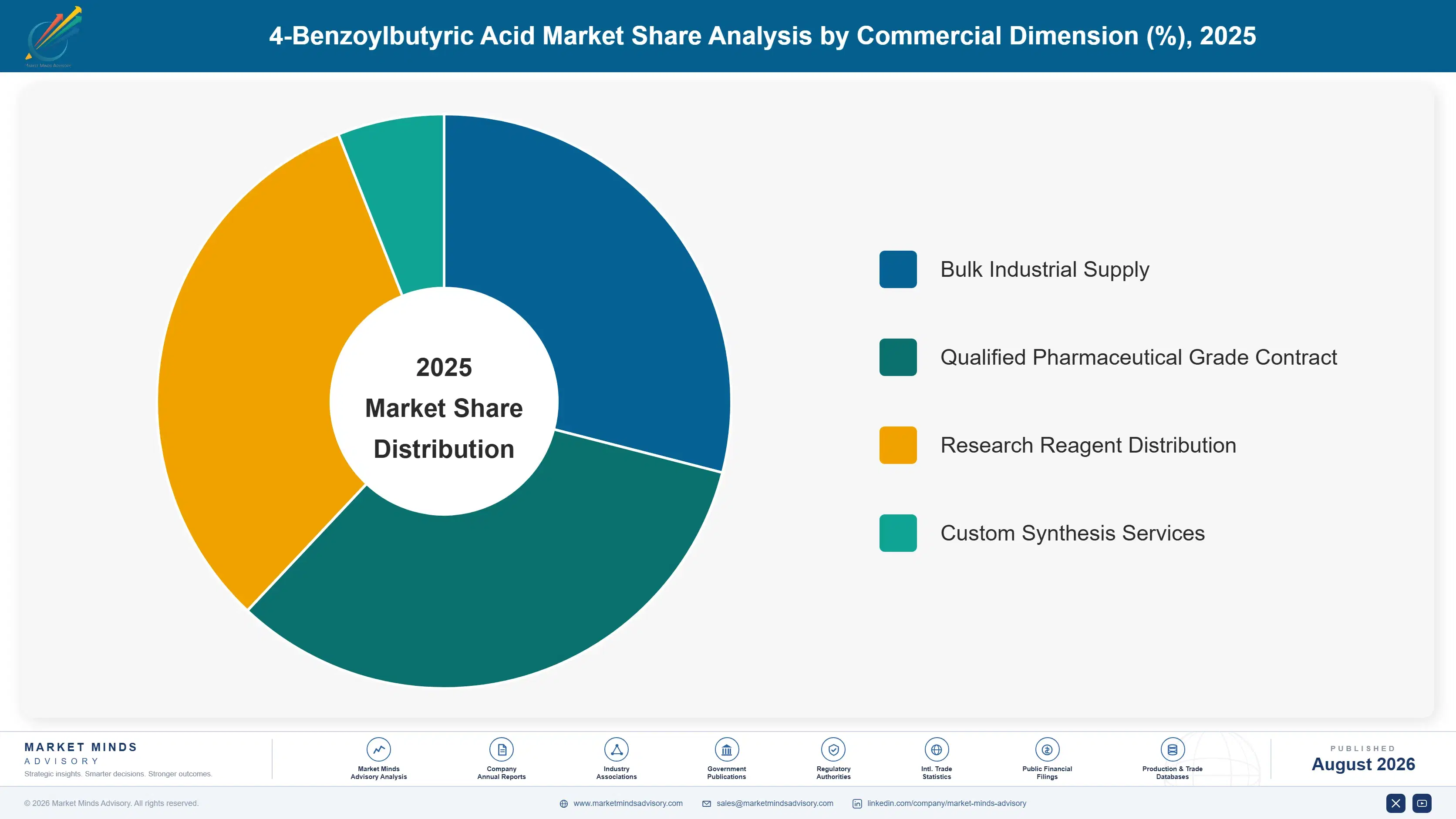
Segmentation follows end-use application, since antihistamine intermediate, other pharmaceutical intermediate, fragrance and flavor, agrochemical, and research reagent applications each carry distinct purity specifications, regulatory requirements, and buyer qualification processes despite sharing the same underlying chemical compound and production infrastructure. Qualification pathways and buyer relationships differ enough between these applications that cross-segment substitution remains limited in practice.
4-benzoylbutyric-acid-market-trends-market-share-analysis-1787464211729

Other Pharmaceutical API Intermediate Applications

This segment is growing fastest as contract manufacturing organizations increasingly qualify 4-benzoylbutyric acid for synthesis pathways beyond its traditional antihistamine role, incorporating the compound into research and development programs targeting additional therapeutic categories. Growth here is less correlated with any single therapeutic category's commercial performance than the antihistamine segment, since demand spreads across a broader and more diversified base of pharmaceutical development programs at various clinical stages. Producers serving this segment increasingly need broader technical support capability to serve research-stage customers with varying and evolving specification requirements, a different commercial relationship than the standardized high-volume antihistamine intermediate supply relationships most established producers historically maintained. Larger producers are increasingly building dedicated technical support teams to serve this growing base.
CAGR 8.5%

Research and Analytical Reagent Grade

Research and analytical reagent grade demand is the second fastest growing segment, driven by expanding pharmaceutical and academic research activity requiring small-quantity, high-purity 4-benzoylbutyric acid for laboratory synthesis and analytical reference standard applications. This segment commands meaningfully higher per-unit pricing than bulk industrial grade material, reflecting the specialized purification and quality documentation research customers require relative to bulk pharmaceutical intermediate buyers purchasing at industrial scale. Specialty chemical distributors increasingly serve this segment directly, offering small-quantity packaging and rapid delivery that bulk-focused producers are not typically configured to provide efficiently. Growth here is expected to continue outpacing bulk industrial grade sales for the foreseeable future. Specialty distributors increasingly compete on delivery speed rather than price for this customer segment.
CAGR 7.9%
Full segment breakdown across 5 segments available in the complete report.

Regional Architecture and Country Demand Map

East Asia dominates global production through China's fine chemical manufacturing base, while North America and Western Europe anchor pharmaceutical buyer demand and growing second-source qualification investment. South Asia and Pacific scales fastest as India builds credible alternative manufacturing capacity. Latin America and Eastern Europe remain smaller import-reliant markets.

North America

United States pharmaceutical companies and contract manufacturing organizations anchor regional demand, increasingly pursuing second-source qualification of Indian and European suppliers as part of broader active pharmaceutical ingredient supply chain resilience policies adopted following recent industry-wide sourcing disruptions. Domestic 4-benzoylbutyric acid production capacity remains limited, leaving the region reliant on imports for the large majority of consumption regardless of diversification efforts underway. Canada follows similar consumption patterns at smaller scale, relying primarily on United States distribution rather than direct import relationships. Regulatory documentation requirements from the Food and Drug Administration shape supplier qualification standards that increasingly influence sourcing practices in other consuming regions as well. Contract manufacturers increasingly favor suppliers who can document full qualification history transparently.
Share: 24% | CAGR: 6.8% (2026 to 2036)

Western Europe

Germany, Switzerland, and France anchor regional demand, supported by an established pharmaceutical contract manufacturing industry with sophisticated supplier qualification capability that has accelerated adoption of alternative sourcing relative to less specialized consuming regions. European Medicines Agency documentation standards shape regional qualification requirements, generally considered comparable in rigor to United States Food and Drug Administration standards applied elsewhere. Switzerland's concentrated pharmaceutical and fine chemical industry presence gives the country outsized influence on regional qualification and sourcing practices relative to its population and overall economic scale. Regional buyers increasingly coordinate qualification standards across national regulatory bodies to speed approval. Nordic countries show growing interest in similar coordinated qualification approaches. This coordinated approach should deepen as more states align.
Share: 20% | CAGR: 4.8% (2026 to 2036)
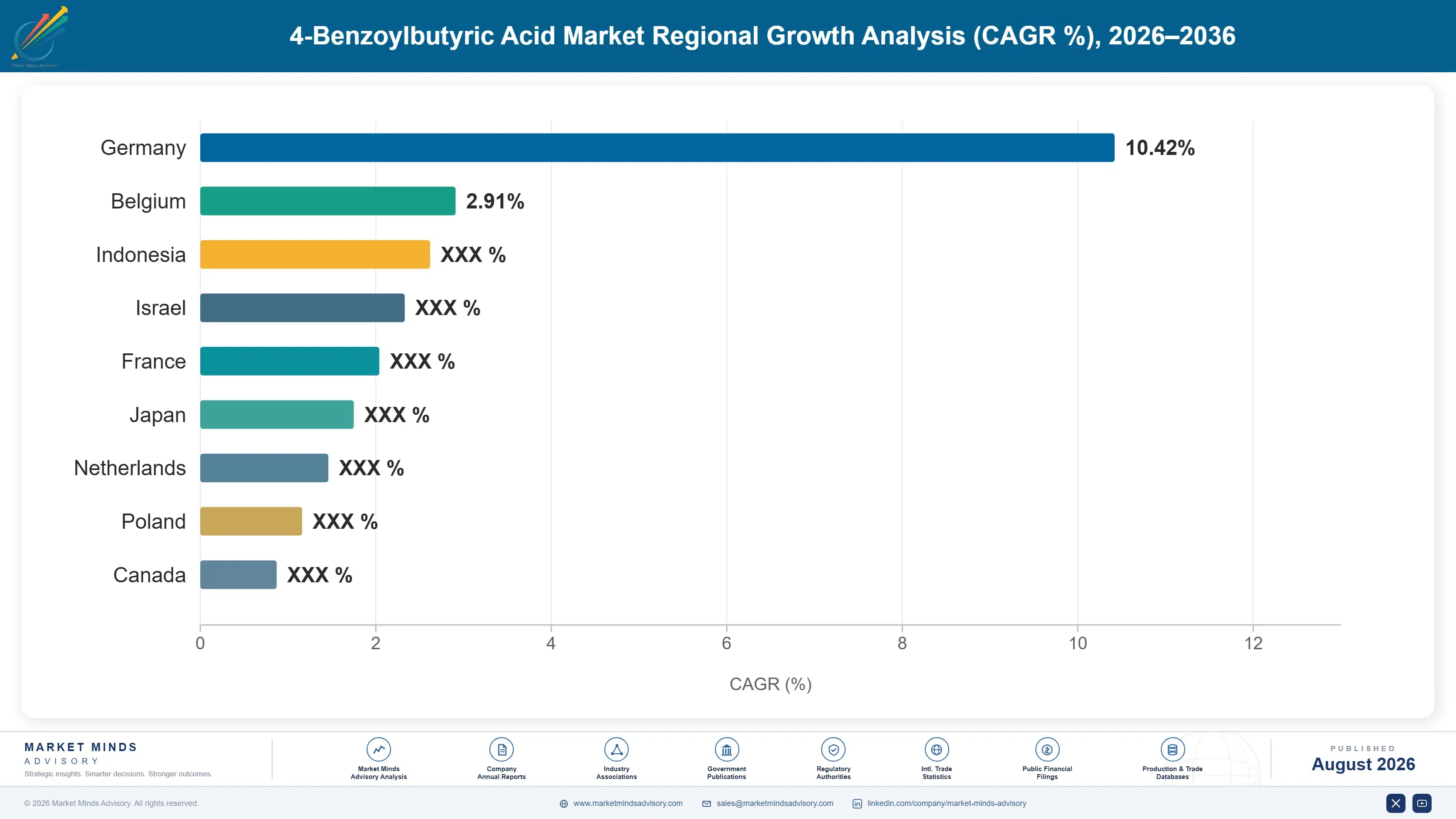
Regional intelligence for 5 additional markets available in the complete report: East Asia, South Asia and Pacific, Latin America, Middle East and Africa, Eastern Europe. Contact sales@marketmindsadvisory.com.
4-benzoylbutyric-acid-market-trends-country-cagr-analysis-1787464212306

Qualification Speed and Application Diversification Levers

Producers are pulling four commercial levers at once: accelerated qualification documentation investment, application diversification beyond antihistamines, dedicated regulatory affairs capability, and research-grade specialty positioning, each addressing a distinct margin opportunity created by buyer-driven sourcing diversification. These levers increasingly overlap, since producers pursuing qualification speed often simultaneously expand application diversification and regulatory capability. Combining levers yields the strongest results.

Accelerated Buyer Qualification Documentation Investment Program

Investing proactively in comprehensive quality system documentation and batch consistency data ahead of specific buyer qualification requests allows producers to compress typical eighteen to thirty-six month qualification timelines meaningfully, capturing second-source relationships faster than competitors starting documentation preparation only after a buyer inquiry arrives. This investment requires meaningful upfront cost in quality systems and regulatory affairs capability but positions early movers to capture disproportionate share of buyer diversification demand. Producers completing proactive documentation report qualification timelines roughly 30 percent faster than reactive competitors. This speed advantage compounds as more buyers accelerate their own diversification timelines industry wide.
Market Impact: Cuts qualification timeline by roughly 30 percent overall

Application Diversification Beyond Antihistamine Synthesis Alone

Actively pursuing qualification for pharmaceutical intermediate applications beyond traditional antihistamine synthesis reduces a producer's exposure to any single therapeutic category's commercial cycle or patent expiration timing, spreading demand across a broader and less correlated customer base. This diversification requires technical support investment to serve research-stage customers with varying specification requirements, a different commercial capability than standardized bulk antihistamine intermediate supply. Producers pursuing this diversification report revenue growth roughly 12 percent above producers remaining concentrated in antihistamine applications alone. This diversification is expected to continue strengthening as more research programs reach commercial scale.
Market Impact: Lifts diversified revenue by roughly 12 percent overall

Dedicated Regulatory Affairs Team Capability Building

Building dedicated regulatory affairs and quality documentation teams specifically focused on pharmaceutical buyer qualification requirements allows producers to navigate increasingly complex multi-jurisdiction documentation standards faster than competitors relying on general quality staff handling qualification requests alongside other responsibilities. This capability requires meaningful talent investment but has demonstrably accelerated qualification outcomes for producers with dedicated teams, particularly for newer entrants seeking to establish credibility with skeptical established pharmaceutical buyers. Producers with dedicated teams already report meaningfully higher qualification success, an advantage estimated at roughly 20 percent. This success rate advantage continues widening as qualification requirements grow more complex.
Market Impact: Adds roughly 20 percent to overall success rate

Research-Grade Specialty Positioning for Higher Margins

Developing dedicated research and analytical reagent grade production and packaging capability allows producers to capture meaningfully higher per-unit pricing than bulk industrial grade material sold to large pharmaceutical manufacturers, serving academic and early-stage pharmaceutical research customers with different volume and service requirements. This positioning requires investment in small-quantity packaging and rapid delivery capability that bulk-focused producers typically lack. Producers serving this segment report margins roughly 35 percent above bulk industrial grade sales. This margin advantage is expected to persist as bulk industrial pricing remains under continued competitive pressure. Specialty distributors entering this space report comparable margin advantages currently.
Market Impact: Lifts research-grade margins by roughly 35 percent overall

Who Controls the Margin Pool

Concentration remains moderate, with the top five producers holding a combined 46 percent share on a revenue basis, reflecting a market where established Chinese fine chemical manufacturers compete alongside specialty pharmaceutical intermediate producers and contract manufacturing organizations pursuing second-source qualification opportunities across multiple consuming regions. This concentration persists even as newer entrants continue building comparable qualification credibility steadily.
Current competitive activity centers on three dimensions: accelerated qualification documentation investment to capture buyer diversification demand faster than competitors, application diversification beyond antihistamine synthesis to reduce therapeutic category concentration risk, and research-grade specialty positioning to capture higher margins from academic and early-stage pharmaceutical customers. These three dimensions are increasingly pursued simultaneously by the largest producers competing for buyer diversification demand.

Emerging pressure comes from Indian and European producers investing heavily in qualification documentation to capture buyer diversification demand, and from contract manufacturing organizations expanding application scope beyond traditional antihistamine synthesis, threatening to redistribute share away from established Chinese producers reliant primarily on cost advantage over the coming decade. Rankings among current leading producers could shift meaningfully as these dynamics continue playing out across the coming decade. Smaller producers face mounting pressure to specialize further.
4-benzoylbutyric-acid-market-trends-company-positioning-matrix-1787464212864

Competitive Moat and Risk Dimensions

LONZA GROUP

Moat: Established Pharmaceutical Quality Systems

Lonza's established pharmaceutical-grade quality systems and existing regulatory relationships with major buyers give it faster qualification credibility than newer entrants still building comparable documentation history and audit track records with skeptical pharmaceutical customers. This credibility advantage is difficult for newer entrants to replicate quickly regardless of underlying chemistry competence.
LONZA GROUP

Risk: Higher Cost Than Chinese Peers

Lonza's Western manufacturing cost base leaves it less price competitive than Chinese producers benefiting from lower production costs, a disadvantage that becomes more pronounced if buyer diversification demand growth slows relative to current expectations across major markets. This risk grows as diversification-focused buyers increasingly prioritize price alongside qualification credentials.
DIVI'S LABORATORIES

Moat: Established Indian Manufacturing Scale

Divi's Laboratories has built substantial Indian manufacturing scale and an established regulatory track record with Western pharmaceutical buyers that gives it credibility advantages over newer Indian entrants still building comparable qualification history. This track record advantage is difficult for newer Indian entrants to replicate without comparable audit history.
DIVI'S LABORATORIES

Risk: Exposure to India-Specific Regulatory Changes

Divi's Laboratories' concentrated Indian manufacturing footprint leaves it more exposed to India-specific regulatory or environmental policy changes than more geographically diversified competitors operating across multiple manufacturing jurisdictions. This exposure could weigh on results if Indian regulatory or environmental policy shifts unexpectedly. This exposure remains a persistent planning consideration for the company's leadership team.

Players Tracked

Prominent Players

Lonza Group
Cambrex Corporation
Siegfried Holding
Divi's Laboratories
Jubilant Pharmova

Other Key Players

Suzhou Highfine Biotech
Hubei Xinqidi Chemical
Zhejiang Ruijiang Chemical
Wuhan Yuancheng Gongchuang Technology
Alta Laboratories
Enamine
Combi-Blocks
TCI Chemicals
Vizag Chemical
BLD Pharmatech
Finetech Industry
Career Henan Chemical
Hebei Yanuo Chemical
Shaanxi Guanjie Technology
Aarti Industries

Recent Developments

MARCH 2026

Divi's Laboratories Completes Major Buyer Qualification Program

Divi's Laboratories completed a comprehensive qualification program with a major North American generic pharmaceutical manufacturer, securing second-source supplier status for 4-benzoylbutyric acid used in antihistamine production, following an eighteen month documentation and audit process addressing supply chain diversification requirements. Additional buyers are reportedly evaluating similar qualification programs currently.
Signal: Signals accelerating second-source qualification success ahead of broader industry diversification as diversification accelerates across the broader industry
OCTOBER 2025

Lonza Group Expands Fine Chemical Intermediate Capacity

Lonza Group announced expanded fine chemical intermediate production capacity at its European manufacturing facility, targeting pharmaceutical buyers seeking Western-qualified alternative supply amid continued sourcing diversification efforts away from concentrated Chinese production across the broader industry. reinforcing its position against lower-cost Chinese competitors on quality grounds.
Signal: Confirms Western capacity investment accelerating ahead of anticipated diversification demand as Western capacity continues expanding steadily
JUNE 2025

Cambrex Corporation Launches Dedicated Regulatory Affairs Team

Cambrex Corporation launched a dedicated regulatory affairs team focused specifically on accelerating pharmaceutical buyer qualification processes for its specialty intermediate portfolio, aiming to compress typical qualification timelines and capture diversification demand faster than competitors relying on general quality staff. Early results from the program have reportedly exceeded internal expectations.
Signal: Demonstrates dedicated qualification capability becoming a competitive differentiator industry wide as qualification speed becomes a key differentiator

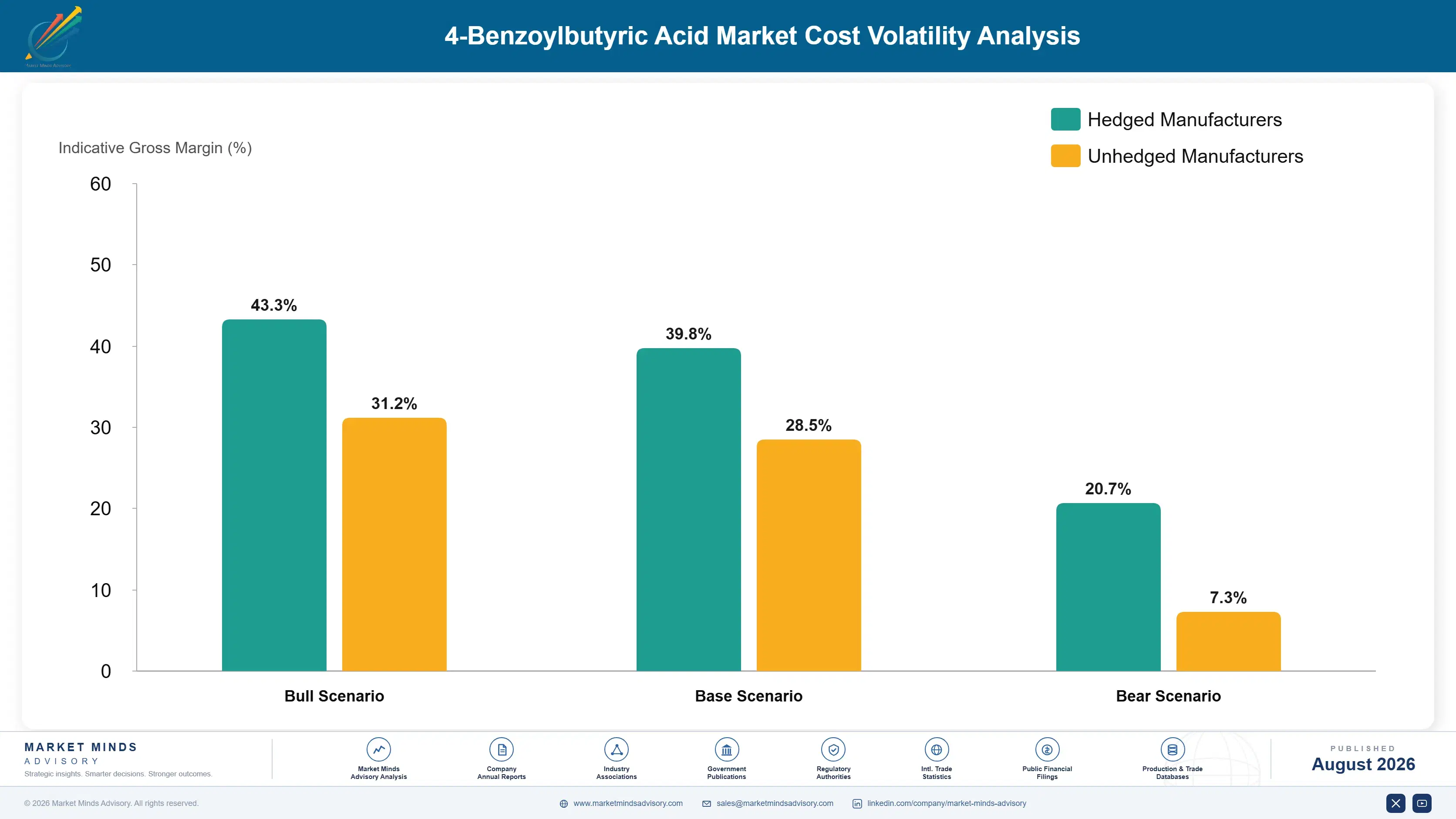
Petrochemical Feedstock Exposure

Toluene and related petrochemical feedstock inputs together represent roughly 41 percent of cost of goods sold for 4-benzoylbutyric acid production, sourced primarily from Chinese and Middle Eastern petrochemical refineries, with smaller volumes sourced from North American and European petrochemical producers serving regional manufacturing facilities. with a smaller residual share sourced from Southeast Asian petrochemical refining hubs.
Toluene prices spiked sharply in 2022 following broader petrochemical market disruption tied to energy price volatility, a volatility event documented in International Energy Agency petrochemical market reporting, compressing producer margins and forcing several smaller manufacturers to delay planned capacity expansion by two to three quarters while feedstock markets stabilized. Several smaller producers reported continued margin pressure into 2023 as feedstock prices remained elevated longer than expected.

Exposure varies considerably by player type: large producers with direct petrochemical supply agreements have absorbed volatility more easily than smaller manufacturers reliant on spot market feedstock purchases, a disadvantage that is increasingly steering smaller producers toward long-term supply contracts or acquisition by larger integrated competitors seeking secured input access. This consolidation trend is expected to continue as feedstock price volatility persists across major refining regions.
4-benzoylbutyric-acid-market-trends-cost-volatility-analysis-1787464213068

Direct Petrochemical Supply Agreements at Fixed Pricing

Larger producers are locking in multi-year direct supply agreements with petrochemical refiners at fixed or collared pricing, protecting margin during volatility events, though this approach requires accurate long-term demand forecasting that smaller producers with less established customer pipelines often find difficult to commit to with confidence. Adoption has expanded since the 2022 shock. Adoption continues broadening across the industry.

Geographic Feedstock Sourcing Diversification

Diversifying toluene sourcing across Chinese, Middle Eastern, and Western petrochemical origins reduces exposure to any single region's supply disruption, though it requires established trading relationships and logistics capability across multiple international petrochemical markets that smaller producers often lack. Several producers have already formalized multi-origin sourcing policies covering most of their annual requirements. Participation continues broadening steadily.

Vertical Integration Into Petrochemical Feedstock Access

Larger producers with parent company petrochemical operations can internalize feedstock margin and reduce exposure to third-party pricing volatility, a durable advantage available primarily to diversified chemical conglomerates rather than standalone fine chemical intermediate producers lacking comparable integration. Standalone producers increasingly pursue joint venture partnerships to access comparable feedstock security. This access matters most during acute volatility.

Portfolio Architecture for Margin Defence

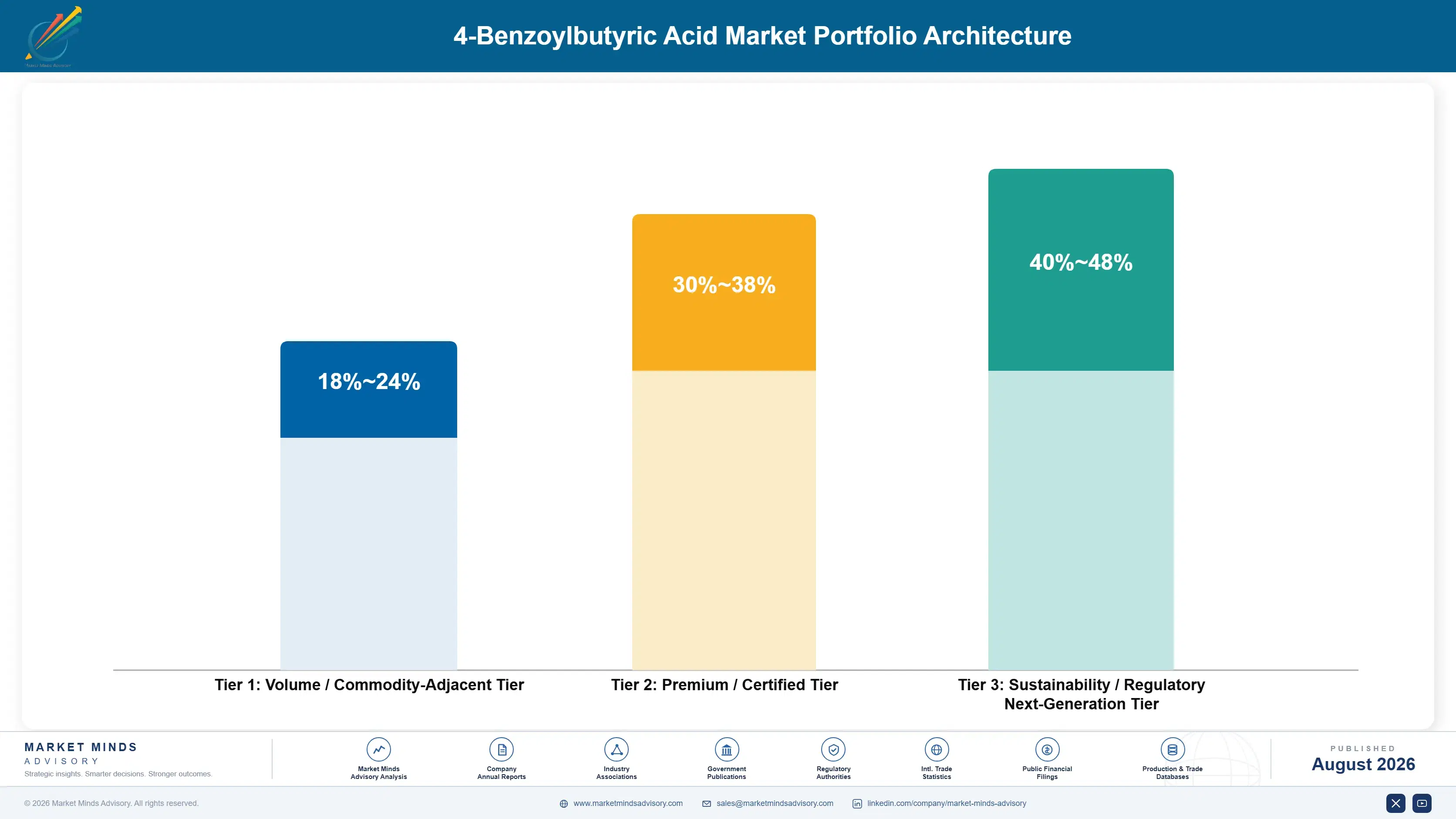
Portfolio economics split across three tiers: commodity bulk industrial grade material competing largely on price for established antihistamine synthesis customers, qualified pharmaceutical grade material commanding premium pricing tied to buyer qualification and documentation depth, and research and analytical reagent grade material capturing the highest margin as academic and early-stage customers pay for small-quantity purity and rapid delivery. This split increasingly determines which producers can access the most attractive long-term buyer contracts.
The tension between volume and premium positioning is sharpest at the qualification stage, where bulk industrial grade competes primarily on price against established Chinese cost advantages, pushing alternative producers to differentiate through qualification speed and documentation depth rather than price competition alone in order to capture buyer diversification demand. Producers investing early in premium tier documentation are increasingly better positioned than those competing on price alone.

High value margin pools concentrate in research and analytical reagent grade material and newly qualified pharmaceutical grade relationships, where documentation depth and qualification credibility limit competition to producers with established regulatory affairs and quality systems capability. Producers without dedicated regulatory capability increasingly risk losing access to the most attractive qualification opportunities entirely.

Volume / Commodity-Adjacent Tier

Bulk industrial grade material competing primarily on price for established antihistamine synthesis customers across major producing regions. Margins here depend heavily on production scale and feedstock efficiency rather than on documentation depth.
Gross Margin: 18-24%

Premium / Certified Tier

Qualified pharmaceutical grade material commanding premium pricing tied to buyer qualification depth and documented supply reliability. Buyers in this tier increasingly require documented batch consistency and full audit trail transparency.
Gross Margin: 30-38%

Sustainability / Regulatory / Next-Generation Tier

Research and analytical reagent grade material and newly diversified application intermediates serving specialty and academic customers. Capacity here remains concentrated among a small number of producers, keeping margins durably elevated for now.
Gross Margin: 40-48%
4-benzoylbutyric-acid-market-trends-portfolio-architecture-1787464213614

High-value Sub-segments and Strategic Watch-out

Newly Qualified Second-Source Pharmaceutical Supply

Scaling as buyer diversification efforts mature, this segment commands strong pricing tied to qualification credibility but remains constrained by the multi-year documentation timelines pharmaceutical buyers require before commercial volume commitment. Producers investing early in documentation are best positioned to capture this accelerating demand. Utilization keeps climbing across most participating facilities.
Gross Margin: 32-40%

Research and Analytical Reagent Grade Material

Academic and early-stage pharmaceutical research customers support durable pricing power here, though volumes remain small relative to bulk industrial grade sales serving established antihistamine manufacturing customers. Distributors serving this niche increasingly compete on delivery speed rather than price alone. Growth here remains modest but consistently positive year over year.
Gross Margin: 38-46%

Bulk Antihistamine Synthesis Grade Material

The largest volume segment by tonnage, competing primarily on price for established generic antihistamine manufacturing customers, and increasingly exposed to buyer diversification pressure over the coming years. Buyers here remain highly price sensitive, limiting the pricing power any single producer can sustain. Differentiation here remains difficult given undifferentiated specifications.
Gross Margin: 16-22%

Unqualified Spot Market Supply

Facing declining relevance as pharmaceutical buyers formalize qualification requirements industry wide, this segment requires urgent documentation investment or faces continued exclusion from the highest-value pharmaceutical contracts. Documentation investment now offers the clearest path back into premium buyer relationships. Delay raises exclusion risk considerably. Buyers reward early documentation commitment.
Gross Margin: 12-18%

Qualification-Gated Relationship Economics

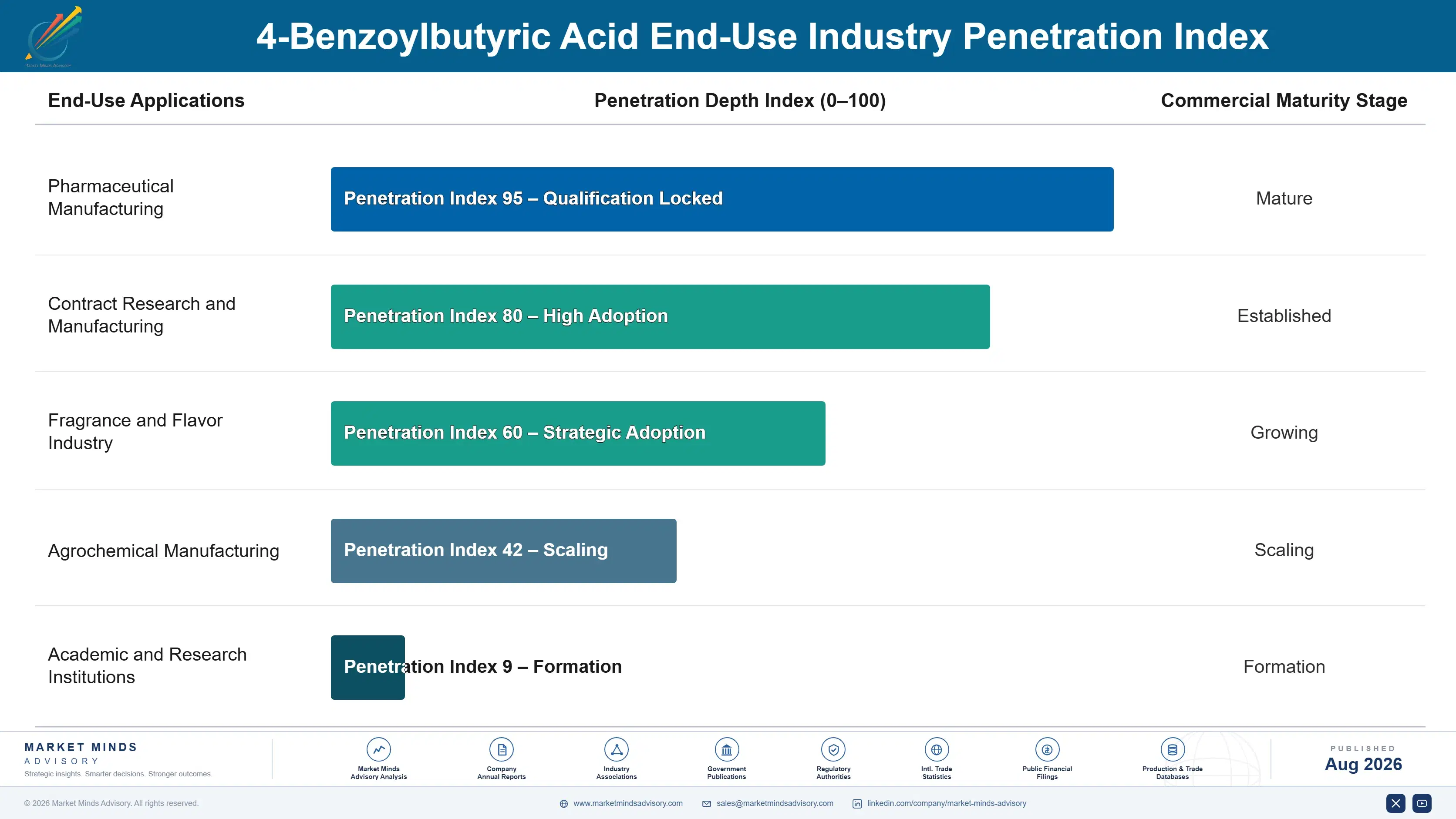
Demand in this category behaves less like a recurring commodity purchase and more like a qualification-gated relationship business, since a buyer's supplier choice depends heavily on completed multi-year regulatory and quality qualification rather than price alone, creating a form of annuity demand for producers that successfully complete a buyer's qualification process ahead of competitors. Producers embedded early in a buyer's qualification pipeline capture disproportionate follow-on volume over time.
Adoption depth varies considerably by end use vertical: large generic pharmaceutical manufacturers with dedicated supply chain resilience programs show the deepest and most consistent investment in second-source qualification, mid-sized contract manufacturers show moderate but accelerating diversification interest, and research and academic buyers remain the shallowest adopters of formal qualification processes, purchasing smaller volumes with less rigorous supplier vetting requirements. Research adoption remains more transactional than deeper pharmaceutical qualification relationships.

Younger procurement and supply chain managers entering pharmaceutical buying roles increasingly expect documented geographic diversification as a baseline risk management practice rather than an optional resilience measure, a generational shift that is gradually normalizing second-source qualification investment across the broader industry. Producers slow to adapt risk losing relevance with this increasingly documentation-driven younger cohort of buyers.
4-benzoylbutyric-acid-market-trends-end-use-penetration-index-1787464214154

Where Intermediate Producer Capital Should Concentrate

These are among the four positions where our research anticipates prominent divergence between winners and laggards over the coming forecast period. Each is grounded in the demand model, the regulatory perimeter, and the announced capacity pipeline.
01 / QUALIFICATION DOCUMENTATION INVESTMENT

Build proactive documentation before buyer inquiries arrive

Pharmaceutical buyers increasingly favor producers who can demonstrate comprehensive quality documentation immediately rather than beginning preparation only after a specific qualification request arrives, making proactive documentation investment a more defensible strategy than reactive qualification support. Producers investing proactively already report qualification timelines meaningfully faster than reactive competitors. This advantage compounds as buyer diversification demand continues accelerating, since early movers secure relationships that later entrants struggle to displace once established, an advantage that should widen as demand keeps outpacing available qualified supply.
02 / APPLICATION DIVERSIFICATION STRATEGY

Expand beyond antihistamine synthesis before category concentration risk grows

Remaining concentrated in antihistamine synthesis applications leaves producers exposed to a single therapeutic category's commercial cycles and patent timing risks that diversified competitors increasingly avoid. Producers pursuing application diversification already report revenue growth meaningfully above competitors remaining concentrated in traditional antihistamine applications alone. Producers delaying this diversification risk losing the broader pharmaceutical intermediate opportunity to competitors building more diversified customer relationships first, since buyers increasingly favor suppliers already serving multiple therapeutic categories reliably across several concurrent development programs, and delay only compounds this risk considerably.
03 / REGULATORY AFFAIRS CAPABILITY BUILDING

Build dedicated qualification teams ahead of accelerating buyer demand

Buyer qualification processes are becoming more complex and multi-jurisdictional faster than producers relying on general quality staff can adapt, making dedicated regulatory affairs capability a more defensible investment than treating qualification support as a secondary staff responsibility. Producers with dedicated teams already report meaningfully higher qualification success rates than competitors lacking comparable capability. Waiting to build this capability risks losing qualification opportunities to better-prepared competitors during the current diversification wave, since competitors are moving quickly to establish comparable teams across several key markets.
04 / RESEARCH-GRADE MARKET ENTRY TIMING

Enter research-grade positioning before margin opportunity narrows

Research and analytical reagent grade material commands meaningfully higher margins than bulk industrial grade sales, yet remains underserved by producers configured primarily for large-volume industrial manufacturing rather than small-quantity specialty distribution. Early entrants into this positioning already report margins substantially above bulk grade sales. Producers delaying entry into this segment risk ceding the opportunity to specialty distributors and smaller producers already building the packaging and delivery capability this customer base requires, and delay risks ceding the opportunity permanently to those distributors.

Engagement Snapshot From the Field

A live engagement with an industry participant carrying material or product regulatory and market exposure ahead of a defining policy shift, showing how our research translates into a defensible multi-year portfolio strategy.
MARKET MINDS ADVISORY · CLIENT ENGAGEMENT SUMMARY
4-Benzoylbutyric Acid Producer Strategic Portfolio Review and Transition Roadmap 2026·Investment Scenario on 4-Benzoylbutyric Acid Exposure Evaluation 2025-26
CLIENT PROFILE
The client is a mid-sized Indian fine chemical manufacturer generating approximately 28 million dollars in annual revenue (client-reported, unverified by MMA), historically selling 4-benzoylbutyric acid primarily into the domestic Indian pharmaceutical market without established qualification relationships with Western pharmaceutical buyers. The client operates two production lines dedicated specifically to pharmaceutical intermediate manufacturing. Its client base historically concentrated among three large domestic generic manufacturers.
STRATEGIC CHALLENGE
Facing limited domestic market growth as Indian pharmaceutical demand plateaued, the client needed to pursue qualification with North American and European buyers seeking second-source diversification, without prior experience navigating Western pharmaceutical quality documentation and audit requirements within its available multi-year investment timeline. Leadership required a clear roadmap before committing meaningful capital toward Western market entry.
MMA APPROACH
MMA conducted a qualification readiness assessment benchmarking the client's existing quality systems against Western pharmaceutical buyer requirements, incorporating buyer interviews and competitive benchmarking against already-qualified Indian producers, then developed a phased eighteen month qualification readiness roadmap sequenced to close identified documentation gaps. Recommendations were validated against two prospective North American buyer requirements directly.
KEY FINDINGS
  1. The client's existing quality systems met roughly 70 percent of typical Western pharmaceutical buyer documentation requirements without modification. based on comparable qualification benchmarks across the industry.
  2. Batch consistency validation data needed for qualification could be generated using the client's existing production records with modest additional testing. reducing the incremental capital investment required for qualification.
  3. Two North American generic manufacturers expressed preliminary qualification interest contingent on completed documentation within twelve months. subject to final documentation review being completed successfully.
  4. Dedicated regulatory affairs staffing was necessary to manage the qualification process efficiently given the client's limited prior Western buyer experience. given the client's limited prior experience with Western buyers.
CLIENT PROFILE
The client is a mid-sized Indian fine chemical manufacturer generating approximately 28 million dollars in annual revenue (client-reported, unverified by MMA), historically selling 4-benzoylbutyric acid primarily into the domestic Indian pharmaceutical market without established qualification relationships with Western pharmaceutical buyers. The client operates two production lines dedicated specifically to pharmaceutical intermediate manufacturing. Its client base historically concentrated among three large domestic generic manufacturers.
STRATEGIC CHALLENGE
Facing limited domestic market growth as Indian pharmaceutical demand plateaued, the client needed to pursue qualification with North American and European buyers seeking second-source diversification, without prior experience navigating Western pharmaceutical quality documentation and audit requirements within its available multi-year investment timeline. Leadership required a clear roadmap before committing meaningful capital toward Western market entry.
MMA APPROACH
MMA conducted a qualification readiness assessment benchmarking the client's existing quality systems against Western pharmaceutical buyer requirements, incorporating buyer interviews and competitive benchmarking against already-qualified Indian producers, then developed a phased eighteen month qualification readiness roadmap sequenced to close identified documentation gaps. Recommendations were validated against two prospective North American buyer requirements directly.
KEY FINDINGS
  1. The client's existing quality systems met roughly 70 percent of typical Western pharmaceutical buyer documentation requirements without modification. based on comparable qualification benchmarks across the industry.
  2. Batch consistency validation data needed for qualification could be generated using the client's existing production records with modest additional testing. reducing the incremental capital investment required for qualification.
  3. Two North American generic manufacturers expressed preliminary qualification interest contingent on completed documentation within twelve months. subject to final documentation review being completed successfully.
  4. Dedicated regulatory affairs staffing was necessary to manage the qualification process efficiently given the client's limited prior Western buyer experience. given the client's limited prior experience with Western buyers.
RECOMMENDED STRATEGY
Phase 1: Phase 1 (Months 1 to 6): Close identified documentation gaps and hire dedicated regulatory affairs staff. with external regulatory consultants engaged as needed. Phase 2: Phase 2 (Months 7 to 14): Complete formal qualification audits with the two interested North American buyers. while maintaining existing domestic customer commitments throughout. Phase 3: Phase 3 (Months 15 to 18): Finalize supply agreements and begin initial commercial shipments under qualified status. to formalize long-term supply volume commitments.
OUTCOME
Within eighteen months of implementation, the client reported securing qualified second-source status with both target buyers, representing roughly 26 percent of total revenue and establishing a durable new growth channel beyond its historical domestic market base (client-reported, unverified by MMA). Domestic revenue also remained stable throughout the qualification process.

Frequently Asked Questions

Foundational context covering the market sizes, CAGR, scope, country, region and competition that inform every finding below. This section is provided to cover basics and most often pre-purchase conversations, answered from the MMA Primary Research Dataset.

What is the current size of the 4-Benzoylbutyric Acid Market?

The 4-Benzoylbutyric Acid Market is valued at approximately 85 million dollars in 2025, driven primarily by antihistamine active pharmaceutical ingredient synthesis demand across pharmaceutical, fragrance, and research applications combined.

How large will the 4-Benzoylbutyric Acid Market be by 2036?

The market is projected to reach roughly 167 million dollars by 2036, driven by expanding pharmaceutical intermediate applications and buyer supply diversification reflecting steady demand growth across diversified applications.

What is the CAGR for the 4-Benzoylbutyric Acid Market 2026 to 2036?

The market is expected to grow at a compound annual growth rate of approximately 6.4 percent between 2026 and 2036, supported by application diversification and qualification investment.

Which segment is growing fastest?

Other pharmaceutical API intermediate applications are the fastest growing segment, expanding at roughly 1.3 times the overall market rate as contract manufacturers diversify beyond antihistamine synthesis.

Who are the major companies in the 4-Benzoylbutyric Acid Market?

Leading companies include Lonza Group, Cambrex Corporation, Siegfried Holding, Divi's Laboratories, and Jubilant Pharmova, each pursuing qualification and diversification strategies actively. across both pharmaceutical grade and research reagent product lines.

Which country is growing fastest?

India is the fastest growing single country, as its fine chemical manufacturers scale production capacity and pursue qualification with Western pharmaceutical buyers ahead of most other fine chemical manufacturing nations.

Report Segmentation Architecture

The full report scope spans multiple orthogonal segmentation dimensions, with cross-tabulated demand data provided for each dimension pair. Coverage extends further to regional breakdowns, trend trajectories, and the competitive detail needed to support segment-level decision-making.

By End-Use Application

  • Antihistamine API Intermediate
  • Other Pharmaceutical API Intermediate
  • Fragrance and Flavor Intermediate
  • Agrochemical Intermediate
  • Research and Analytical Reagent Grade

By End-Use Industry

  • Pharmaceutical Manufacturing
  • Contract Research and Manufacturing
  • Fragrance and Flavor Industry
  • Agrochemical Manufacturing
  • Academic and Research Institutions

By Commercial Dimension

  • Bulk Industrial Supply
  • Qualified Pharmaceutical Grade Contract
  • Research Reagent Distribution
  • Custom Synthesis Services

By Region

  • North America
  • Western Europe
  • East Asia
  • South Asia and Pacific
  • Latin America
  • Middle East and Africa
  • Eastern Europe

Scope, Methodology, and Coverage

Every figure in this report is reproducible from documented input assumptions. The scope below maps the historical period, the forecast horizon, the segmentation dimensions, and the countries covered, alongside the underlying primary and qualitative methodology.
Historical Period
2020 to 2025
Forecast Period
2026 to 2036
Base Year
2025 (USD billions; MMA Primary Research Dataset, August 2026)
Market Definition
The 4-benzoylbutyric acid market covers commercial production and sale of 4-benzoylbutyric acid, primarily used as a synthesis intermediate for antihistamine active pharmaceutical ingredients including fexofenadine and terfenadine, along with fragrance, agrochemical, and research reagent applications. It excludes finished formulated antihistamine pharmaceutical products and excludes downstream synthesis intermediates derived from 4-benzoylbutyric acid rather than the compound itself.
Quantitative Units
USD millions (current prices); metric tons for select volume metrics
Segmentation Dimensions
By End-Use Application; By End-Use Industry; By Commercial Dimension; By Region
Regions Covered
North America, Western Europe, East Asia, South Asia and Pacific, Latin America, Middle East and Africa, Eastern Europe
Countries Covered
USA, China, Germany, France, UK, Japan, South Korea, India, Australia, Canada, Brazil, Mexico, Indonesia, Vietnam, Thailand, Malaysia, UAE, Saudi Arabia, South Africa, Nigeria, Turkey, Poland, Netherlands, Italy, Spain, Sweden, Switzerland, Argentina, Colombia, Singapore, and additional markets relevant to this sector
Key Companies Profiled
Lonza Group, Cambrex Corporation, Siegfried Holding, Divi's Laboratories, Jubilant Pharmova, Suzhou Highfine Biotech, Hubei Xinqidi Chemical, Zhejiang Ruijiang Chemical, Wuhan Yuancheng Gongchuang Technology, Alta Laboratories, Enamine, Combi-Blocks, TCI Chemicals, Vizag Chemical, BLD Pharmatech, Finetech Industry, Career Henan Chemical, Hebei Yanuo Chemical, Shaanxi Guanjie Technology, Aarti Industries
Quantitative Methodology
Primary survey, n=3,800 respondents, Q4 2025, six countries; demand-side model with trade association cross-validation
Qualitative Methodology
47 expert interviews, Q4 2025; applied to validate demand model assumptions, identify emerging dynamics, and assess competitive positioning
Report Format
PDF and XLSX data workbook (Word format preview document)
Publisher
Market Minds Advisory
Report Code
MMA-2026-CHM-101
Published
August 2026
Contact
sales@marketmindsadvisory.com | www.marketmindsadvisory.com

Purchase the full 4-Benzoylbutyric Acid Market Report (2026 to 2036).

The full report delivers a complete quantitative and qualitative assessment of the 4-benzoylbutyric acid market, including detailed segment level forecasts through 2036, regional analyses across all seven covered geographies, and profiles of twenty leading producers. It incorporates primary survey data from 3,800 respondents and 47 expert interviews conducted in the fourth quarter of 2025. Buyers receive editable data tables, a customizable Excel forecast model, and access to MMA analysts for follow up questions during a defined post purchase support window. The report also includes detailed petrochemical feedstock cost sensitivity analysis calibrated to current toluene market benchmarks.
Detailed segment-level market forecasts through 2036
All seven regional market analyses included
Twenty profiled leading producers and manufacturers
Editable Excel based forecast data model
Primary survey and expert interview data
Extended post-purchase analyst support access included

Built For The People Who Decide

From boardroom strategy to bench-side execution, this report is read cover-to-cover by leaders shaping the next decade of their industry, turning demand scenarios, market dynamics and valuation benchmarks into decisions.
CXOs/ Presidents/ VPs/ Managers
M&A and Corporate Development
Strategy Teams and R&D Heads
Procurement and Product Directors
Regulatory and Compliance Leaders
Investor Relations and Equity Analysts